Where pandas live in China and how to see them in person: the Chengdu base, the Wolong reserve, red pandas and everything you need to know before a trip to Sichuan.
Pandas in China live not in one place but in several at once: the main point is the panda base in Chengdu, but you can also see the animals at the Wolong reserve, at the Bifengxia base in Ya’an, as well as in the zoos of Beijing and Shanghai and at the Chimelong safari park in Guangzhou. If you need to choose one place, it is Chengdu: a ticket to the base costs 55 yuan, you can get there by metro or taxi, and the best time to visit is the morning feeding. Below we cover where to see pandas in China, how to get to the base in Chengdu, what time to come, how the other places differ and what to do if the base is under reconstruction.
- The main place: the panda base in Chengdu, an adult ticket is 55 yuan.
- When to go: at opening and until 10 a.m., while feeding is going on.
- Additions: the Wolong reserve and the Bifengxia base in Sichuan.
- Without Sichuan: the zoos of Beijing and Shanghai, Chimelong in Guangzhou.
- Before the trip: check the status of the base in Dujiangyan, it is closed for reconstruction.
Current as of October 2026. Check opening hours and the status of the bases before the trip.
Why pandas in China are not just “another zoo”
Seeing a giant panda in the wild is almost impossible even for local biologists: the animal is secretive, lives in hard-to-reach bamboo forests at an altitude of one and a half to three thousand metres and has long been listed in the Red Book. But in China, and above all in Sichuan province, a unique system of research bases and nurseries has developed in which pandas are kept in conditions as close as possible to natural — spacious enclosures with hills and bamboo groves rather than cramped cages. These are at once scientific breeding centres and tourist sites you can visit on your own, without hunting for the rare chance of meeting a panda in the forest. For a tourist it is a chance to see the animal that has become a symbol of the whole country a few metres away — and in exactly the region where pandas truly live.
Where pandas live: Sichuan province and the status of “panda capital”
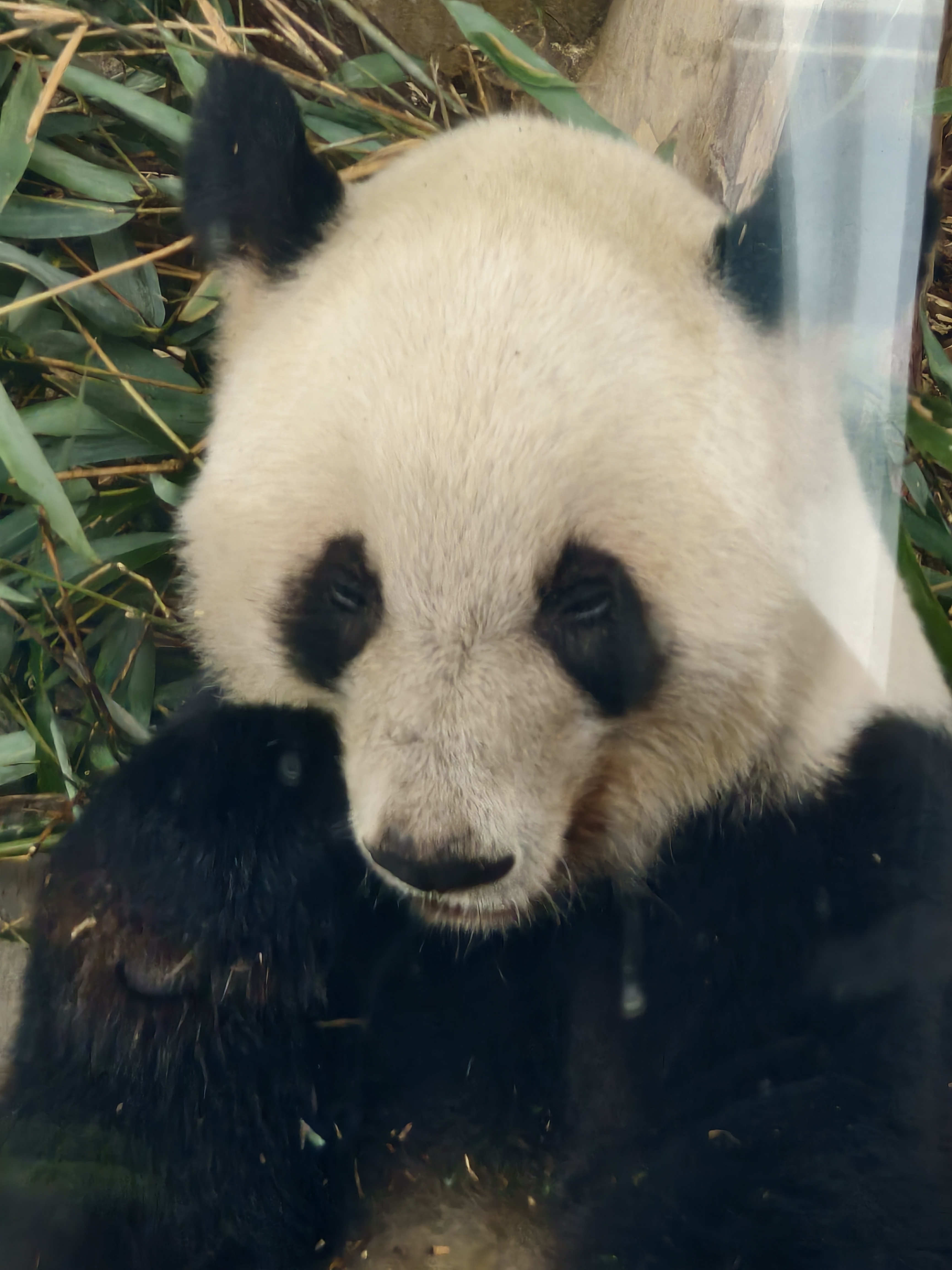
Wild giant pandas survive only in a few mountain areas of central China — the provinces of Sichuan, Shaanxi and Gansu, with the overwhelming majority of the population concentrated in Sichuan, in the Qinling and Minshan ranges. The city of Chengdu, the provincial capital, has long secured for itself the unofficial status of “panda city”: it is here that the largest and best-known panda breeding research base works, and the city itself uses the panda image as part of its brand — from the airport to souvenir shops.
According to the latest national census, about 1,864 giant pandas are counted in the wild. This does not mean the animal is easy for a tourist to meet — wild pandas still keep away from people, and seeing them in their natural habitat is realistic only on specialised scientific expeditions that are not designed for mass tourism. So the whole practical sense of a trip to “see pandas” comes down to visiting research bases and reserves where the animals live under supervision but in large open enclosures rather than in cages.
The reason pandas are so attached to these particular mountains is bamboo: it makes up practically their entire diet, and the needed species of bamboo grow in a narrow strip at the middle altitudes of the Sichuan ranges. Cut down the forest for a road or a farm and the strip of territory suitable for pandas breaks into isolated islands between which the animals physically cannot move. It is this fragmentation of habitat, and not poaching, that has for many years been considered the main threat to the species, and it is the restoration of forest corridors between reserves that a considerable part of China’s nature protection programmes of recent decades is aimed at.
The natural landscape around the reserves
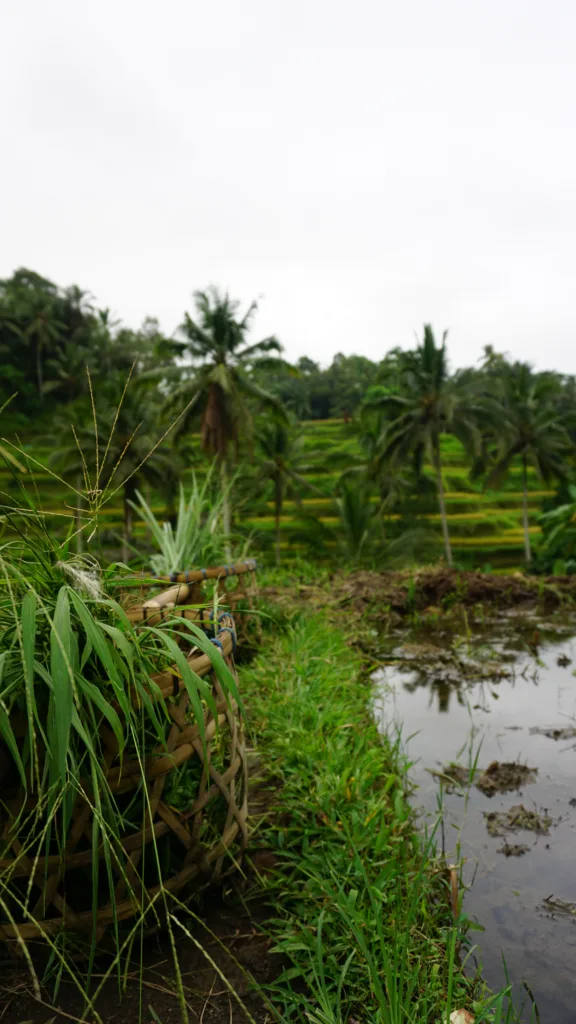
The mountains of Sichuan themselves are not only the pandas’ home but a tourist goal in their own right: humid subtropical forests on the plain gradually give way to coniferous and bamboo stands at altitude, and above two thousand metres in some reserves snow lies even in late spring. Such a change in climate and vegetation is one of the reasons the province is considered one of the most biologically diverse regions of China: besides pandas, golden snub-nosed monkeys, leopards and dozens of species of rare birds are found in the same mountain forests.
Pandas in numbers: population, keeping, status
If we compare the wild and captive populations, the picture is roughly as follows: about 1,864 individuals in the wild (data from the latest national census) and around 800 pandas in nurseries, research bases and zoos around the world — from Chengdu to foreign zoos to which pandas are transferred under international scientific cooperation programmes. It is this second group that is available to tourists for viewing.
The panda base in Chengdu — the main place to start
The Chengdu Research Base of Giant Panda Breeding (成都大熊猫繁育研究基地) was founded in 1987 — it was created then for six pandas rescued from the wild on a plot of about 12 hectares. Today it is a huge territory — over 200 hectares of bamboo groves, ponds and pavilions — where dozens of pandas of different ages live, from newborn cubs in the nursery to adults in open enclosures. Besides its tourist function, the base remains a working scientific centre: reproduction, genetics and the health of pandas are studied here.
Tickets and opening hours
A standard adult ticket costs 55 yuan. Children under 6 enter free (advance registration is needed), visitors over 60 also enter free on presentation of a passport without advance booking, and children aged 6–17 get a 50% discount. It is more convenient to buy tickets online in advance — on peak dates (Chinese holidays, school holidays) it is better to avoid queues at the ticket offices. In high season the base opens at 7:30, in low season (roughly November to February) from 8:00 to 17:30.
How to get there
The base is about 15 km from the centre of Chengdu, and you can get there by metro: on Line 10 from Shuangliu airport (Chengdu Shuangliu International Airport) to Taipingyuan station, change there to Line 3 to Xiongmao Dadao station (“Panda Avenue”) — then 10 minutes by bus No. 198 or by taxi/DiDi. The journey from the airport by metro with a change takes about an hour, from the city centre about 45–60 minutes. Simpler and quicker is a taxi or DiDi: from Shuangliu airport the ride takes about 40 minutes and costs around 120 yuan. Note that Chengdu has two airports: at the new Tianfu (TFU) the metro runs on Line 18, at the old Shuangliu (CTU) on Line 10, with different routes.
When to come to catch the pandas lively
Pandas sleep for most of the day — up to 12–14 hours a day — and are active mainly during feeding. Keepers start the morning feeding around 8:00, and for the following hour and a half to two the pandas eat bamboo, climb and play in almost all the enclosures at once. The practical conclusion is simple: come at opening and plan your visit for the period from 7:30–8:00 to 10:00 in the morning — after that most pandas go to sleep until the evening, and instead of active animals you will see sleeping balls of fur in the shade.
Other places where you can see pandas
The Wolong reserve (卧龙)
The Wolong National Nature Reserve in Wenchuan County (Aba Tibetan and Qiang Autonomous Prefecture) is one of the oldest and largest panda reserves in China, founded in 1963, and it is here that more than a hundred wild pandas live in their natural environment. For tourists the Shenshuping base works — in effect another nursery-reserve, but in mountainous terrain, quieter and less touristy than the base in Chengdu. The downside is distance: the road from Chengdu takes several hours one way, so you should allow a full day for the trip including the visit. The pandas’ activity times here are similar — morning and daytime feeding hours.
The base in Dujiangyan (都江堰)
Another large base of the China Conservation and Research Centre for the Giant Panda (CCRCGP) is in Dujiangyan, about 1.5 hours’ drive from Chengdu — it is usually called a quieter and less crowded alternative to the main base, and until recently it was here that volunteer programmes were most often organised. However, since 23 April 2026 the base has been closed for infrastructure reconstruction, and the date of resumption has not yet been officially announced — be sure to check the current status before the trip.
The base at Bifengxia, Ya’an (碧峰峡)
In the prefecture-level city of Ya’an, about 150 km from Chengdu, the Bifengxia base works — also part of the CCRCGP system, where about 70 pandas live in semi-free conditions. It is one of the few centres where the “volunteer day” programme continues to work after the closure of the base in Dujiangyan.
The zoos of Beijing and Shanghai
If your route does not include a trip to Sichuan, you can see pandas in the capital zoos too. Beijing Zoo has a separate “Panda House” with several animals — from April to October keepers add extra feedings for the pandas, which raises the chance of seeing active animals. Shanghai Zoo also has pandas, although the exhibition is more modest than the Sichuan bases. This is a sensible option for those who fly via Beijing or Shanghai and do not plan to reach Chengdu.
The red panda — a separate animal often confused with the giant panda
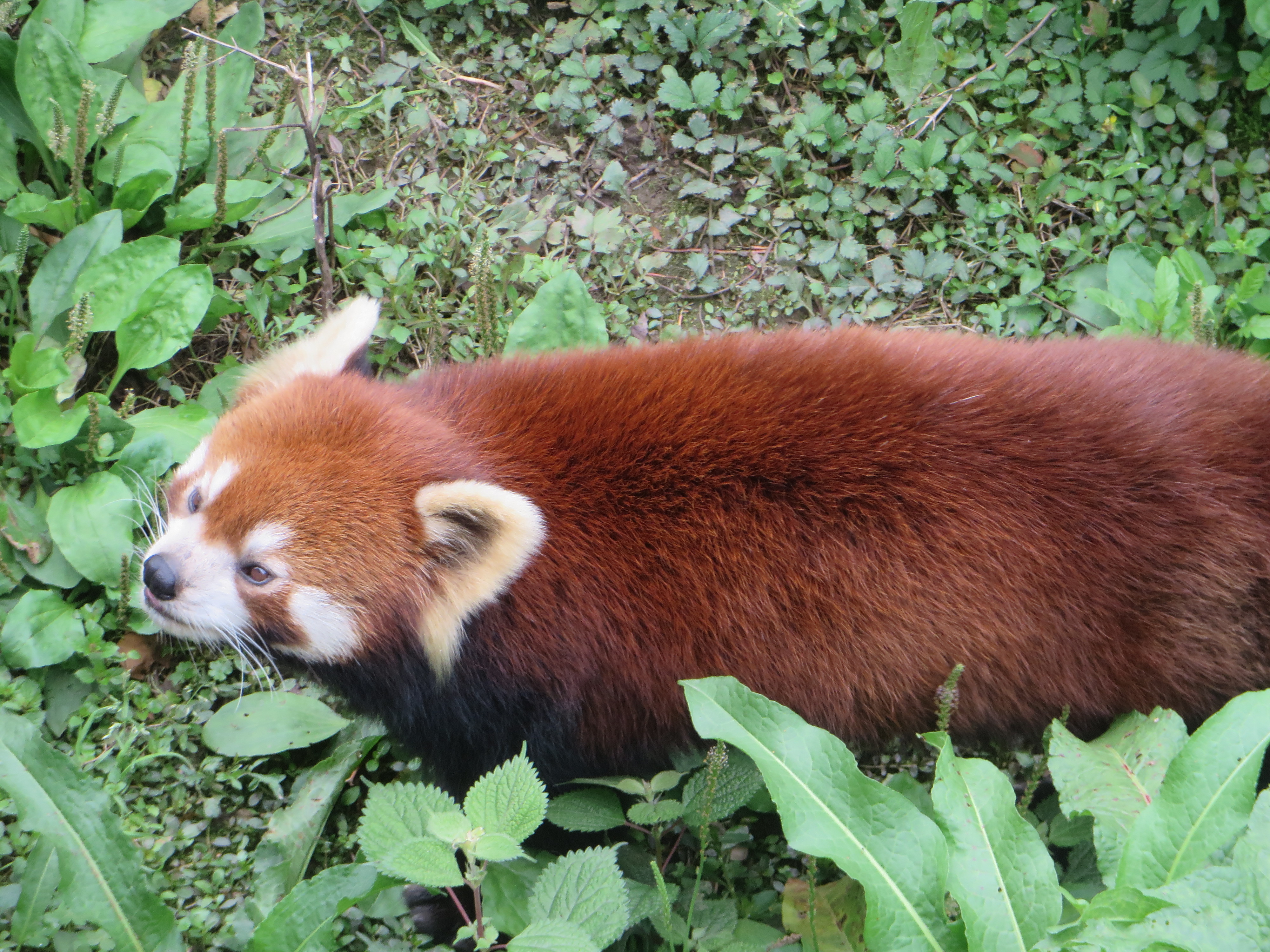
The red (lesser) panda is not a relative of the giant panda but a separate family: a ginger fluffy animal the size of a big cat, outwardly much more like a raccoon or fox than the classic black-and-white bear. You can see red pandas at the same base in Chengdu — a separate free-roaming zone (the Red Panda Outdoor Activity Area) and a nursery are set aside for them there, where the animals often wander right next to the visitor paths, quite close to people. In the Wolong reserve, at the Hetaoping base, a large group of red pandas lives — by various data several dozen individuals — and volunteer programmes for the care of red pandas specifically are organised there, separately from the giant ones.
Volunteer programmes and “hug a panda”: what is really available
The “keeper for a day” programme (panda keeper for a day) is a real format offered by several bases and tour operators: participants are allowed to clean enclosures and prepare “panda cakes” and bamboo food under the supervision of staff. Such programmes must be booked in advance, usually a few weeks ahead — there are few places, and tour operators buy up the quotas first. The cost varies greatly depending on the operator, the duration and the included services (transfer, guide, lunch), so there is no point naming a single price in yuan — check it directly with the specific tour operator or on the base’s official website before booking.
But direct physical contact — the very “hug a panda” with a photograph holding it, which used to be actively advertised — has in recent years been abolished at all the large bases in Sichuan: visitors are no longer allowed to hold pandas for the sake of the health and safety of the animals themselves. If you see advertising on the internet with a guarantee of “holding a panda in your arms”, treat it with caution and check the current rules directly with the base — the marketing texts of travel agencies are updated more slowly than the real restrictions.
Practical tips for the trip
- When to go. Pandas are theoretically available for viewing all year round, but it is most comfortable in spring and autumn, when Chengdu is not as hot and humid as in summer. The time of year hardly affects the pandas’ activity: the time of day matters more.
- How much time to allow. For the base in Chengdu at least half a day, better from early morning to lunch. For Wolong or Bifengxia a full day including the road.
- What to bring. Comfortable shoes (the territory of the base in Chengdu is huge and you will walk a lot), water, sunscreen and something against mosquitoes — part of the route goes through bamboo groves.
- How to get around inside the base. On the Chengdu base there are free electric shuttle cars between the far pavilions — it is worth using them if you did not come right at opening and time is short.
- Combining with another route around Sichuan. Many tourists combine the panda base with sightseeing in Chengdu over a day or two, and if a longer trip around the province is planned it is logical to add the city of Leshan with its giant Buddha statue or the mountain resort of Jiuzhaigou, but these are separate multi-day destinations that should be planned in advance, not “on the side”.
- Queues and crowds. The peak of attendance is Chinese national holidays (especially May and October breaks) and summer school holidays. On these dates it is worth allowing more time for the queue at the entrance and buying a ticket in advance rather than counting on the ticket office on the spot.
- Visa and logistics. If you haven’t yet arranged entry to the country, see a separate guide: the China visa. Travel between cities (for example if you combine Chengdu with other regions) is easier to plan in advance — read about transport and trains in China. Payment on the spot almost everywhere goes through mobile wallets — see the guide to Alipay and WeChat Pay.
What tourists say
In reviews of the base in Chengdu two things most often repeat: the base itself leaves a very warm impression — the pandas really are sweet and touching — and almost everyone who came after 10 a.m. regrets not having come earlier. In one Russian-language review on Trip.com the visit to the base is described briefly and emotionally: “the panda base is simply amazing” — and this broadly matches the overall tone of most reviews on various platforms. The scale of the territory is noted separately: you can walk around the whole base for several hours, so rushing to the far pavilions in the first hour is not always justified — it is better to concentrate on the nearest enclosures with adult pandas and the nursery while the animals are active.
Frequently asked questions
In which city of China do pandas live?
The main centre is Chengdu, the capital of Sichuan province: it is there that the best-known and largest panda breeding base is located. You can also see pandas at the Wolong reserve and at the base in Ya’an (both points in the same province), and without a trip to Sichuan in the zoos of Beijing and Shanghai.
How much is a ticket to the panda base in Chengdu?
An adult ticket is 55 yuan. Children under 6 and adults over 60 enter free (advance registration is needed for children), and children aged 6–17 get a 50% discount.
Can I hug or hold a panda?
No, at the large bases in Sichuan direct physical contact with pandas for tourists was abolished in recent years for the health and safety of the animals. “Volunteer day” programmes with panda care under staff supervision are available, but not holding the animal in your arms.
At what time of day are pandas most active?
In the morning, during feeding — roughly from 7:30–8:00 to 10:00. After that most pandas fall asleep and remain sluggish until the evening, so an early visit is critically important if you want to see active animals.
Is it worth going to the Wolong reserve instead of the base in Chengdu?
It is more a supplement than an alternative: Wolong is farther from the city (the road takes several hours one way), but quieter with fewer tourists. If the time in the trip is limited to one day, it is more logical to start with the base in Chengdu — it is more compact logistically and lets you see more pandas of different ages in less time.
Are pandas really on the brink of extinction?
Formally the status is already milder: in 2016 the International Union for Conservation of Nature (IUCN) downgraded the giant panda’s status from “endangered” to “vulnerable” — an acknowledgement of the success of years of breeding and protection programmes. But the species still remains vulnerable and dependent on the preservation of habitat, so the problem cannot be called solved.
Where to see pandas in China?
Best of all in Sichuan: the panda base in Chengdu, the Wolong reserve, the Bifengxia base in Ya’an. If you don’t get to Sichuan, there are pandas in the zoos of Beijing and Shanghai (the wildlife park in Shanghai) and at the Chimelong safari park in Guangzhou. The exhibition there is more modest than the Sichuan one.
What is the panda base in Chengdu and how do I get there?
It is the Chengdu Research Base of Giant Panda Breeding, a working scientific centre on a territory of more than 200 hectares, founded in 1987. It is about 15 km from the centre: metro to Xiongmao Dadao station (Line 3) and a bus or taxi, or straight away a taxi or DiDi. Tickets and fares are on the page the panda base in Chengdu.
How much time is needed for the panda base in Chengdu?
The territory is large and you can walk around it for several hours, but the main thing is to look in the morning hours, while the pandas are eating. Allow the morning for the visit and don’t plan anything complicated straight after.
Do I need to buy a ticket to the panda base in advance?
On peak dates (Chinese holidays, school holidays) it is better to buy online in advance so as not to stand in the queue at the ticket office. Check the opening hours: in high season the base opens at 7:30, in low season at 8:00. Payment in China goes through Alipay or WeChat Pay, Russian cards don’t work, see how to pay in China.
Can I see pandas in Beijing?
Yes, Beijing Zoo has a “Panda House”. It is an option for those who are not going to Sichuan, although the exhibition is more modest than at the bases in Chengdu. It is convenient to reach Chengdu from other cities by high-speed train, see China’s high-speed trains.
What else is there to see near Chengdu besides pandas?
The Giant Buddha in Leshan (how to get there from Chengdu), Dujiangyan and Mount Qingcheng (an excursion), a Sichuan opera show (face-changing). The general route: Chengdu and Jiuzhaigou, excursions in Chengdu.
In short: how to plan a trip to the pandas
If your time in China is limited, the optimal plan is simple: set aside a separate morning for the panda base in Chengdu, arrive at opening, buy a ticket in advance online and don’t plan anything active for the rest of the day after lunch — you will most likely get tired just from walking around the territory. Those who want more time with the animals and are ready to sacrifice a day of the trip should look at Wolong or Bifengxia. And for everyone already building a route around Sichuan, it makes sense to check straight away the current data on how the bases are working — schedules and reconstruction status change faster than many guidebooks are updated.
More on the topic: China’s airports · trip budget · when to go to China.
Chengdu hotels: all hotels · near Chunxi Road.