Nightlife in Japan: the two hundred tiny bars of Golden Gai in Shinjuku, the Omoide Yokocho yakitori alley, the clubs of Shibuya and Roppongi, and Osaka's loud nighttime Dotonbori.
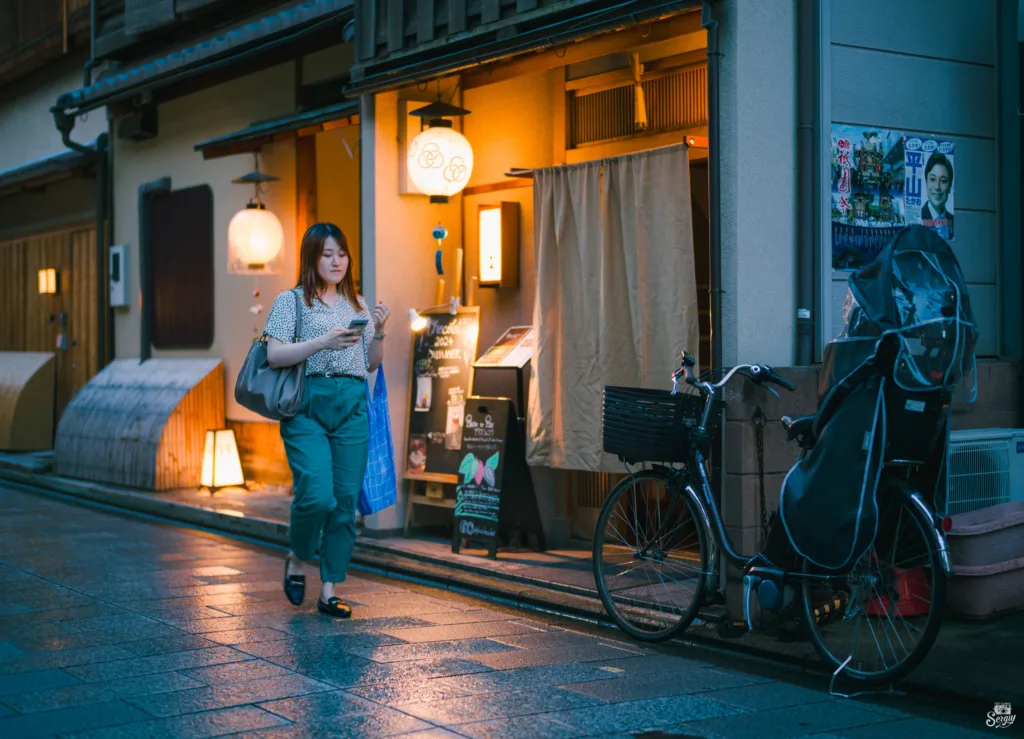
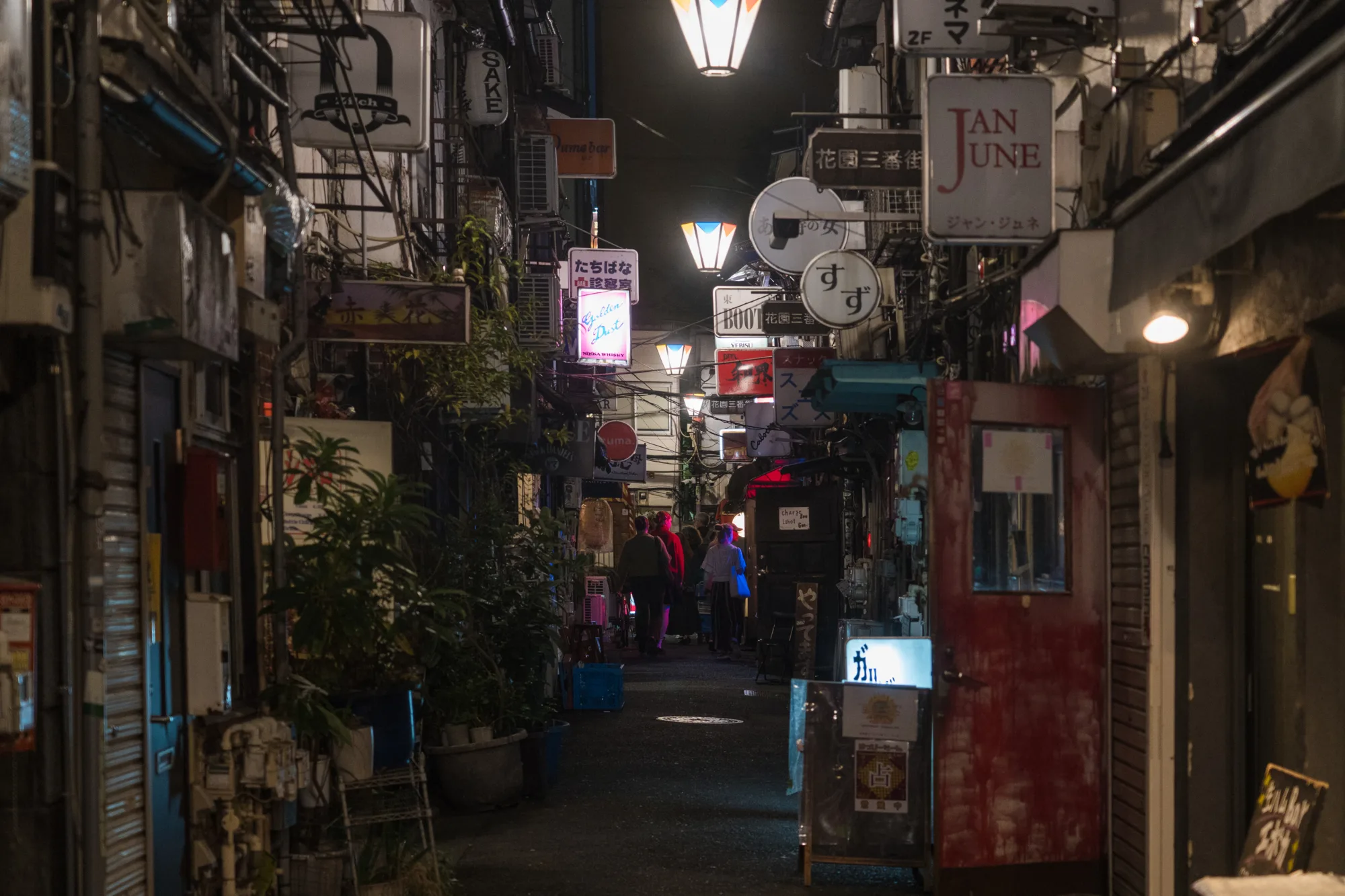
Tokyo at night is unlike any other megacity in Asia — there is no single district of bars and clubs here, but there are dozens of tiny universes squeezed into alleys the width of a shoulder span. In one such alley — Golden Gai in Shinjuku — six narrow lanes hold more than two hundred closet-sized bars, each with its own character and regulars; in the neighbouring Omoide Yokocho the smoke of yakitori grills drifts between stalls where people dine standing up; and nearby Kabukicho booms in neon — the city’s largest entertainment district. Making sense of this mosaic is easier than it seems if you understand the logic of the districts.
Golden Gai: two hundred bars on six alleys
Golden Gai is literally six narrow lanes in the very centre of Shinjuku, lined with tiny wooden bars, each of which holds at most six to eight people. Each venue has its own unrepeatable character: the theme, atmosphere and regulars are determined by a single owner-bartender who decided for himself what his tiny kingdom would be — from a bar for jazz lovers to a place where the owner has spent twenty years discussing old films with guests. The cover charge is usually from 500 to 1,500 yen and often includes a small snack, and a sensible tactic is to come early, while drink prices are lower and it is easier to find a free seat in a six-person bar.
Omoide Yokocho: yakitori and nostalgia
Next to Golden Gai hides another cult alley — Omoide Yokocho, which translates roughly as “Memory Lane”. Narrow passages are lined with tiny yakitori counters and open stalls where food is cooked right before the guests’ eyes, and the smell of grilled skewers hangs in the air all evening. The atmosphere here is fundamentally different from the club districts — cosy, slightly nostalgic, ideal for starting the evening with a light dinner and a few mugs of beer before moving on around Shinjuku.
Shibuya and Roppongi: clubs and an international party
If Shinjuku is about small bars with character, Shibuya is about youthful energy and dance floors: the district, world-famous for its crossing, turns at night into one of the city’s main club centres with a dense concentration of venues a couple of minutes’ walk from the station. Roppongi, in turn, is traditionally considered Tokyo’s most international nightlife district — a significant part of the large clubs and bars aimed at a foreign audience are concentrated here, with a more universal atmosphere, understandable to visitors, than in Shinjuku’s authentic alleys.
Osaka: louder and simpler than Tokyo
If Tokyo’s nightlife tends toward intimacy and alleys, Osaka is a city of the directly opposite temperament: the main artery of night-time fun, the Dotonbori district along the canal of the same name, greets guests with giant glowing signs — from the running Glico man to a huge mechanical crab — and a dense row of bars, izakayas and clubs right along the water. The Osaka crowd is noticeably more open and noisy than Tokyo’s, and prices are on average slightly lower than the capital’s — it is no accident that the city is called the gastronomic and party capital of Kansai, where Tokyoites themselves often travel for the weekend for the contrast with the more restrained atmosphere of their own capital.
Practical Tokyo rules
The Tokyo metro closes around midnight, and this is almost the main thing to remember when planning an evening — if you haven’t judged the time, the only way to get home before the metro opens at six in the morning is a taxi, which costs noticeably more than in most other Asian capitals. The small bars of Golden Gai and similar alleys close relatively early, by two or three in the morning, while the big clubs of Shibuya and Roppongi often work until five or six in the morning, so the evening’s route should be planned in advance if you don’t want to get stuck on the street in the gap between one venue closing and the next train. And a separate hack for budget evenings — look for izakayas with a nomihodai system, unlimited alcohol at a fixed price for a set time.
FAQ
Where is it best to start an evening in Tokyo? At Omoide Yokocho or any izakaya for a light dinner, and then move on to Golden Gai or further to Shibuya and Roppongi — depending on whether you are looking for an intimate atmosphere or club energy.
Is there a language barrier in Golden Gai bars? Often yes — many tiny bars are oriented primarily to local regulars, but tourists are, as a rule, welcomed warmly, and some venues are specially marked as open to foreigners.
What should I do if I miss the last metro train? Call a taxi — a more expensive option but absolutely reliable and safe at any time of day; an alternative for the thrifty is to wait for the metro to open around six in the morning at one of the all-night venues.
How much does an evening in Golden Gai cost? On average from 2,000 to 4,000 yen for a couple of hours including the cover charge and a couple of drinks at one or two bars — prices vary from venue to venue.
Which district should I choose if I don’t find my way around well and want something simpler? Roppongi — the clearest and most international nightlife district in the city, with English-speaking staff in many venues.
Opening hours, prices and the current list of venues may change — check the information before your trip.