Japan's most expensive hotels outside Tokyo: Aman Kyoto, Amanemu, Four Seasons Kyoto, the legendary ryokan Tawaraya and Hiiragiya, resorts near Mount Fuji — prices, reviews and how to choose.
We have already covered Tokyo’s most expensive hotels — Aman, Janu and Bvlgari. But the real summit of Japanese luxury is not in the capital but in Kyoto: where moss, bamboo and five-hundred-year-old pines are added to concrete and glass. Aman Kyoto stands apart even among Aman hotels — the very ones that define the whole genre of “quiet luxury”. Here too are ryokan where guests have been received by the same families for fifteen generations in a row, and resorts at the foot of Fuji where the sacred volcano is visible from the window. This article is the second part of a big overview of Japanese luxury: Aman Kyoto and the country’s other most expensive hotels, hotels near Fuji, Kyoto’s legendary ryokan and what distinguishes “quiet luxury” from the urban chic we covered in the article on Tokyo.
- The most expensive: Aman Kyoto (about 181 thousand ₽ a night) and Amanemu on the Shima peninsula (about 166 thousand).
- Kyoto classics: Four Seasons Kyoto (about 87 thousand), Suiran (about 49 thousand), the ryokan Hiiragiya and Tawaraya (from 40 to 64 thousand).
- Near Mount Fuji: resorts in Fujikawaguchiko and Hakone, from which the volcano is visible.
- How to read the prices: minimum values on Trip.com at the time of collection; higher in the cherry blossom and autumn maple seasons.
- Season: spring (cherry blossom) and autumn (maples) are the most expensive and crowded months in Kyoto.
- Main tip: a ryokan is a format with dinner and breakfast included; clarify this before comparing prices.
Aman Kyoto: a garden, not a hotel
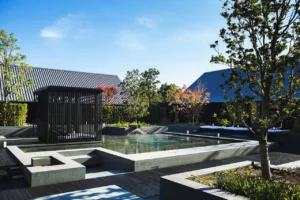
Aman Kyoto stands in the northern part of the city, on the grounds of a former private garden with five-hundred-year-old pines and moss, next to the Kamigamo Shrine. It is one of the most secluded hotels of the brand: a small number of pavilion villas scattered over a wooded plot, a minimum of ostentatious luxury and a maximum of quiet. The guest rating on Trip.com is 4.9 out of 5, and the “hotel health” by our data shows a score of 4.9. The price guide, about 181 thousand roubles a night, is the highest figure among Japanese hotels in our database with enough reviews. More in the article Aman Kyoto and on the hotel page.
Amanemu: an onsen by the sea on the Shima peninsula
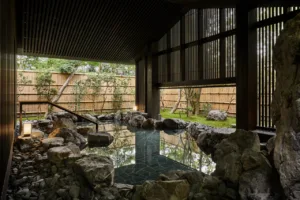
Amanemu is a resort on the Shima peninsula, in Ise-Shima National Park, by Ago Bay. It is a rare Aman hotel built around Japanese onsen culture: each villa has its own hot spring, and the shared bathhouse has windows onto a lake. The price guide is about 166 thousand roubles a night, the guest rating 4.8. The place is quiet and remote, so it suits those ready to spend time on the road for seclusion. Nearby is Ise Shrine, one of the country’s main Shinto shrines.
Comparison table
| Hotel | Where | Guide price per night | Guest rating |
|---|---|---|---|
| Aman Kyoto | Kyoto | about 181 thousand ₽ | 4.9 |
| Amanemu | Shima | about 166 thousand ₽ | 4.8 |
| Four Seasons Hotel Kyoto | Kyoto | about 87 thousand ₽ | 4.5 |
| The Westin Miyako Kyoto | Kyoto | about 79 thousand ₽ | 4.8 |
| Ritz-Carlton Kyoto | Kyoto | — | 4.9 |
| Hiiragiya Ryokan | Kyoto | about 64 thousand ₽ | 4.8 |
| Suiran, a Luxury Collection Hotel | Kyoto, Arashiyama | about 49 thousand ₽ | — |
| Gora Kadan | Hakone | about 57 thousand ₽ | 4.9 |
Data is from Trip.com at the time of collection; the actual price depends on the date, category and whether dinner is included in the price (in ryokan, as a rule, it is).
Kyoto’s legendary ryokan: Tawaraya and Hiiragiya
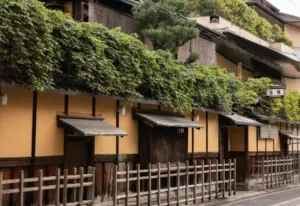
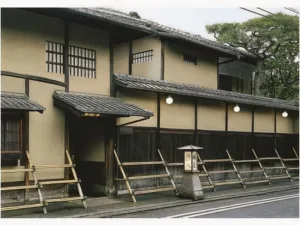
Tawaraya is one of the oldest ryokan in Japan, which, according to tradition, has been run by one family for centuries. There are only about twenty rooms here, and the service is built on long-standing relationships with guests: many return for years and ask for the same room. More in the article Tawaraya Ryokan. Hiiragiya is another historic Kyoto ryokan, operating since the early 19th century; the price guide is about 64 thousand roubles, the guest rating 4.8. Both ryokan sell not just a room but the “kaiseki” format: a multi-course dinner served in the room and breakfast in the morning, so their price cannot be directly compared with an ordinary hotel — the cost includes high-level gastronomy. More — Hiiragiya Ryokan.
Four Seasons, Ritz-Carlton and Suiran: international luxury in Kyoto
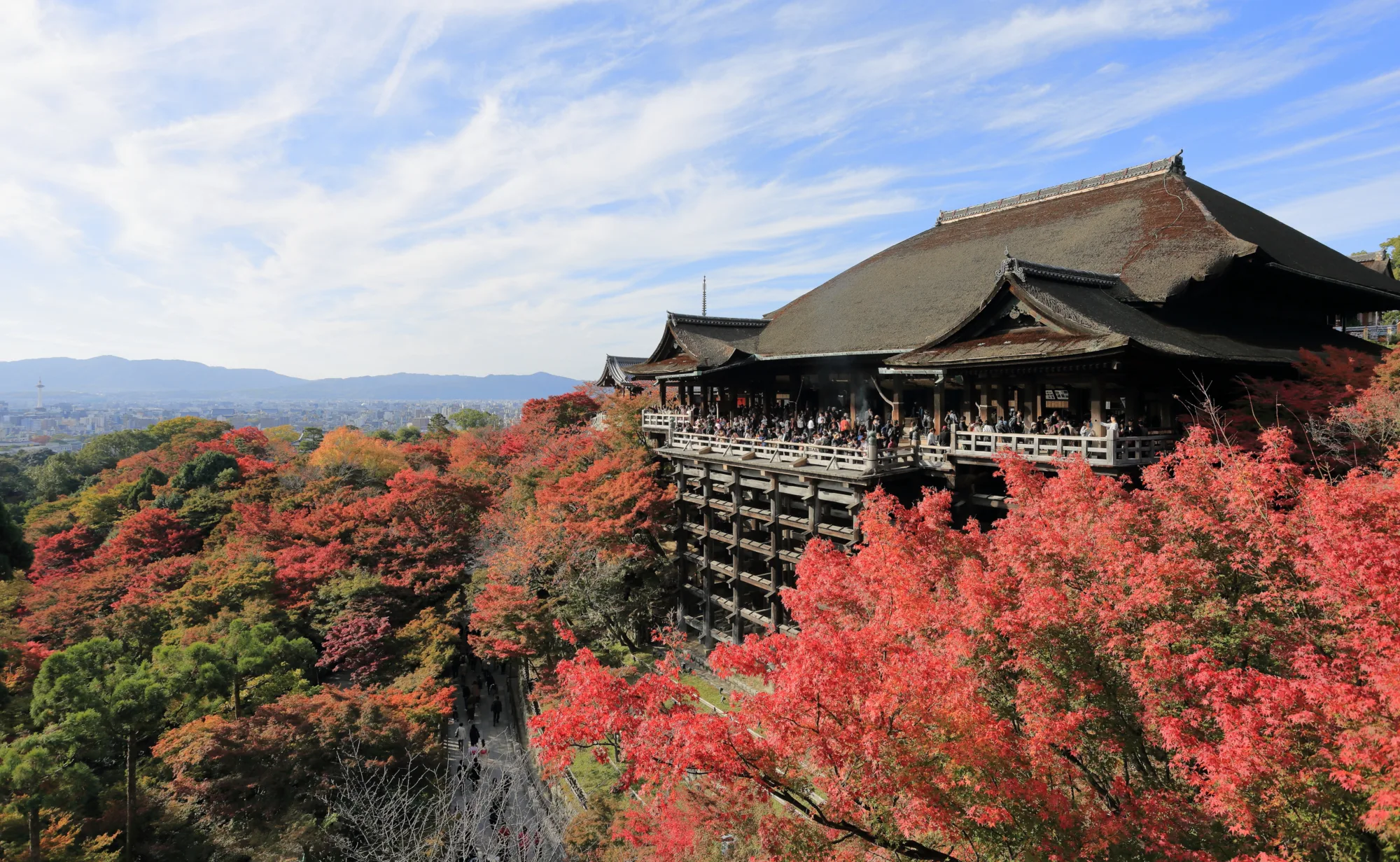
Four Seasons Hotel Kyoto is located near Sogo Pond, in a quiet part of the city; the guide is about 87 thousand roubles. Ritz-Carlton Kyoto stands on the bank of the Kamogawa River with a view of the Higashiyama mountains; the hotel already appeared in our article on Gion Matsuri. Suiran is in the Arashiyama district, next to the bamboo grove and the Hozugawa River — convenient for those who want to combine the city with walks through the famous bamboo forest. All three give an international standard of service combined with Kyoto scenery — bridges, mountains and gardens.
Hakone and Fujikawaguchiko: ryokan with a view of Fuji
West of Tokyo, at the foot of Fuji, are concentrated resorts from whose window or open rooftop pool the sacred mountain is visible. In the Hakone area are the well-known ryokan Gora Kadan (about 57 thousand roubles, a rating of 4.9 from 79 reviews) and several modern resorts with private onsen; in Fujikawaguchiko the FUFU chain and HOSHINOYA Fuji, oriented to a panoramic view of the volcano. These places differ from Kyoto and Tokyo: there is less urban bustle and more nature, and hot springs are part of the daily ritual. The weather decides everything: the mountain is not always visible because of clouds, so the clearer the season, the higher the chances. The best months for seeing Fuji are winter and early spring.
What a ryokan is and why its price works differently
If you compare prices in Tokyo and Kyoto, remember: a ryokan is not just a hotel but a format with meals included, often at the level of “kaiseki” — a multi-course seasonal dinner. The guest changes into a yukata, is fed dinner right in the room or in a separate hall, and in the morning is served a traditional breakfast. The service is built around the “nakai” — a personal maid who looks after the guest all day. That is why the nightly price in a ryokan is often higher than in an ordinary hotel of comparable level: you pay not only for the room but for a full gastronomic programme and personal service.
Seasonality: cherry blossom, maples and clouds over Fuji
Prices for Japanese luxury depend most strongly on the season. Spring, when cherry trees bloom — details are in our guide Cherry Blossoms in Japan 2027 — is the most expensive and most crowded period: the best rooms in Kyoto are snapped up six months ahead. Autumn with red maples is almost as popular. Summer is hotter and more humid but cheaper; in the shoulder season it is easier to find a room in historic ryokan. For Fuji it is not so much the date that matters as the weather: a clear sky in winter gives more chances of seeing the whole volcano.
How a day in a ryokan works
A day in a traditional ryokan follows its own rhythm. Check-in is usually from the middle of the day, and right after it the guest is offered tea with sweets and a change into a yukata — a light cotton kimono you can wear around the whole building. In the daytime it is customary to stroll around the garden or go to the hot spring; dinner is served in the evening, often in the room, from several dozen small dishes reflecting the season. After dinner the nakai clears the table and lays out a futon on the tatami — this is done without the guest, while he bathes again or takes a walk. In the morning breakfast is served, also traditional, and check-out is in the first half of the day. This format requires a slow pace: a ryokan combines poorly with a busy sightseeing programme on the same day.
Onsen in luxury format
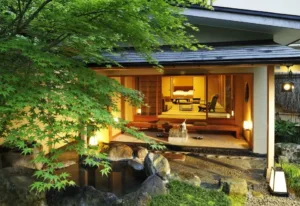
Hot springs are an important part of Japanese luxury, and the best hotels build a whole philosophy around them. At Amanemu on the Shima peninsula almost every villa has its own open-air spring, and the shared bathhouse has windows onto a lake. In Hakone many ryokan and resorts offer private baths on the room balcony so that the guest can enjoy the spring out of sight. If the onsen is what matters to you, check when booking: is there a private bath in the room, is it open to the outdoors, is the spring natural or heated water used. For rules of behaviour in bathhouses see our article on onsen and tattoos.
Gardens as part of the architecture
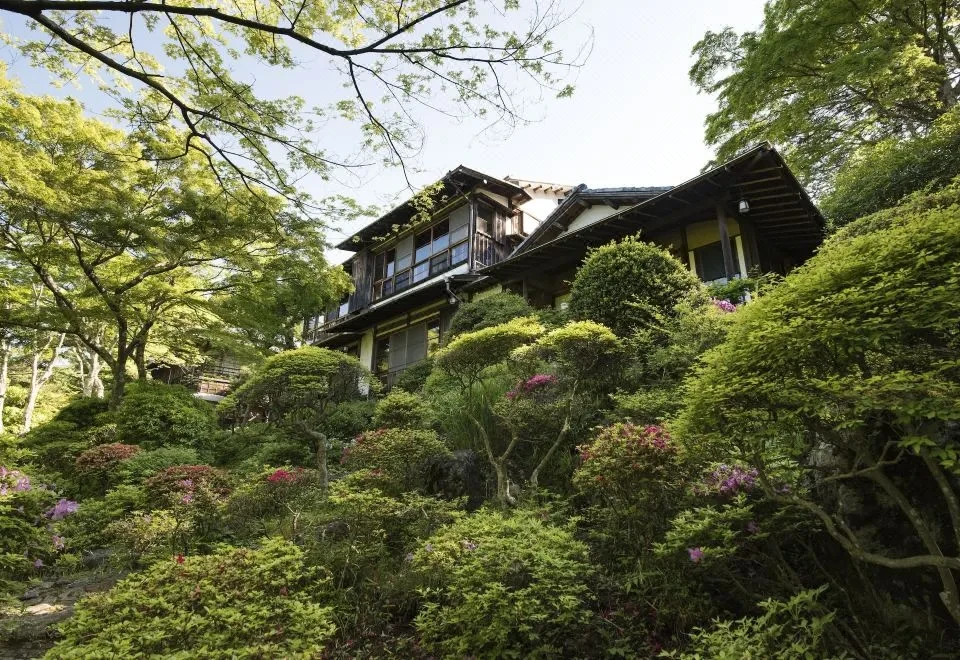
Many luxury hotels in Japan are built around a garden, not the other way round. At Aman Kyoto the garden existed before the hotel — the territory belonged to a private owner and had been planted with trees more than a hundred years earlier; the architects fitted the villas into the existing landscape rather than clearing space for buildings. In Kyoto ryokan inner courtyards, the tsubo, create a feeling of nature even in the very centre of the city. A walk in such a garden in the morning, while other guests are still asleep, is one of those moments for which people return to such places again and again. If you value architecture and landscape, choose hotels by exactly this criterion, not only by brand.
Transport and logistics for a luxury trip
Many of these hotels are not in the centre of a metropolis, so it is important to think through the logistics. Aman Kyoto is located in a part of the city remote from the station — a taxi or transfer is essential. For Amanemu on the Shima peninsula, according to the platform, the hotel arranges a transfer, but the journey from Osaka or Nagoya still takes several hours. Resorts near Fuji require a rented car or an arranged transfer, since public transport rarely runs to specific properties. Plan the arrival day without a packed programme: a long journey with suitcases is not the best start to a holiday. For getting around the country see the article on JR Pass mistakes.
How to choose: ryokan or an international brand
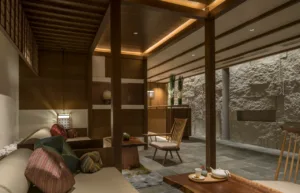
Choose a ryokan if you want deep immersion in Japanese tradition: kaiseki dinner, yukata, a futon on tatami, personal service. Choose an international brand — Aman, Four Seasons, Ritz-Carlton — if familiar standards, a pool, a gym and English-speaking staff matter to you. Aman Kyoto and Amanemu occupy an intermediate position: Japanese aesthetics combined with Aman’s international service. If you are going to Japan for the first time, it makes sense to spend at least one night in a traditional ryokan and the rest in a familiar hotel.
With children and as a couple
Many traditional ryokan are poorly suited to small children: tatami, futons and strict dinner hours are designed for a calm environment. For families international brands like Four Seasons and Ritz-Carlton with more flexible service are better. For couples and a honeymoon a ryokan or Aman is an almost ideal choice: an unhurried dinner, a private spring, the quiet of a garden. If you do go to a ryokan with children, check age restrictions in advance and the possibility of an earlier or separate dinner.
How to save while keeping the style
Book outside the peak weeks of cherry blossom and maples. Look at mid-range ryokan — for example less famous than Tawaraya and Hiiragiya, but with a similar kaiseki format. Choose weekdays: in Kyoto weekend prices are noticeably higher. Look for packages that include dinner and breakfast — in ryokan this is often better value than booking meals separately. And remember: the difference between an “expensive” and a “very expensive” ryokan is sometimes not in the quality of the food but in the brand and the history of the building.
Practical tips
Special rules apply in ryokan: take off your shoes at the entrance, don’t walk on tatami in patterned socks (by etiquette, plain white socks), and don’t take the yukata outside the hotel. Dinner is often served at a strictly set time — check the schedule on arrival. For resorts near Fuji find out the weather forecast in advance: you shouldn’t count on a guaranteed view. For etiquette and related topics see our articles on onsen and tattoos and climbing Mount Fuji.
FAQ
Which hotel in Japan outside Tokyo is the most expensive? Aman Kyoto, the guide is about 181 thousand roubles a night.
How does a ryokan differ from a hotel in price? A ryokan’s price usually includes kaiseki dinner and breakfast, so it cannot be directly compared with an ordinary hotel.
When is the best time to go to Kyoto? In spring for the cherry blossom or autumn for the maples; at these times it is more expensive and crowded.
Is a view of Fuji guaranteed? No: the mountain is often hidden by clouds; in winter the chances are higher.
Can I stay for less while keeping the atmosphere? Yes, there are mid-range ryokan with a similar kaiseki format.
Do I need to know Japanese for a ryokan? No, big ryokan accept foreigners and explain the rules in English.
Prices are guides based on Trip.com data at the time of collection; the actual cost, terms and services depend on the date and rate — check when booking.