Lijiang and Dali in Yunnan: the Naxi old town, Erhai Lake, the Three Pagodas, getting there by high-speed train, the best time, altitude and health, cuisine and ready routes.
Yunnan is called the “south of the clouds”, and once you are here you understand that the name is not a poetic convention. In the morning mist spreads over Erhai, by day mountain peaks float above the roofs of the old town, and in the evening lanterns light up in the lanes, and it seems that time has slipped back two hundred years. Lijiang and Dali are the two main stops of the Yunnan route, and they are very different. Lijiang is the ancient town of the Naxi people with canals, stone bridges and the peak of Jade Dragon on the horizon: beautiful, noisy and slightly “museum-like”. Dali is a lake, bicycles, the white houses of the Bai people and a three-tower pagoda that has stood here for more than a thousand years: calmer, farther from the crowd and closer to local life. Together they give a classic southwestern journey through China: mountains, lakes, antiquity, tea, cuisine and the feeling that you have ended up in another country, although on the map you are still in China. This guide covers how it all works, when to go, how to get there, what is worth not skimping time on and what you can skip.
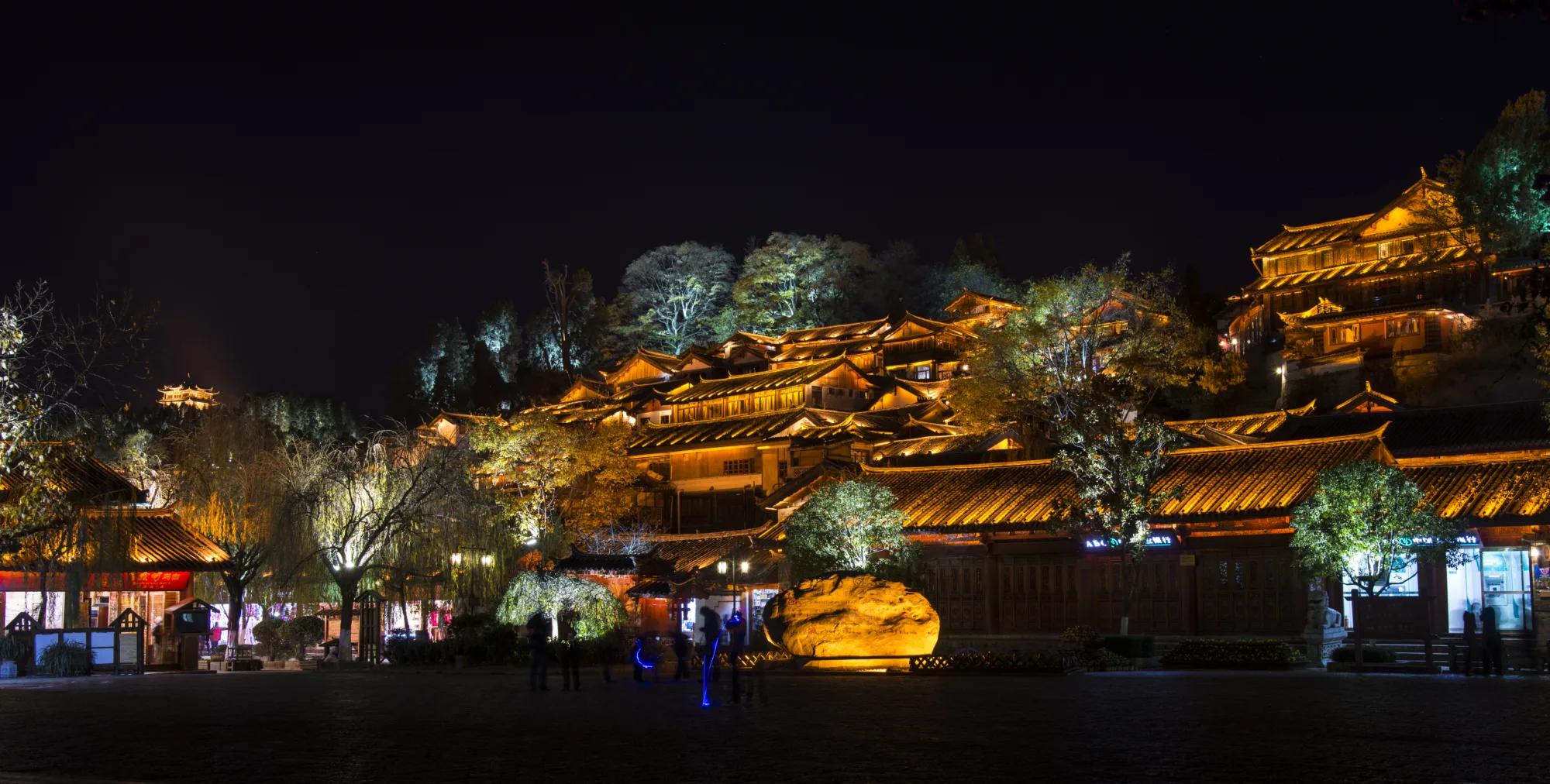
- Lijiang: the old town of the Naxi people, on the UNESCO list since 1997; located at an altitude of about 2,400 meters.
- Dali: a city by Erhai Lake, the capital of the Bai people, altitude about 2,000 meters; famous for the Three Pagodas of Chongsheng Temple.
- The road between them: a high-speed train from Dali to Lijiang takes about an hour; from Kunming it is two to three hours to Dali.
- Best time: March–May and September–November; summer is the rainy season, winter is cold at night.
- Health: the altitude is felt: in the first days move without hurry and don’t overdo alcohol.
- Main tip: in Lijiang get up early, in Dali take a bicycle and leave the tourist streets.
Yunnan: why people come here and what to know in advance
Yunnan province in southwest China is famous for its ethnic diversity — dozens of peoples live here, each with its own costumes, cuisine, festivals and architecture. The Naxi and Bai are the two best known to tourists, but far from the only ones. Yunnan attracts lovers of mountains and trekking (Tiger Leaping Gorge, snowy peaks), tea (the homeland of pu-erh), gastronomy (mushrooms, goat-milk cheese, “guoqiao mi xian” rice noodles) and simply unhurried rest. The climate depends strongly on altitude: by day it can be hot and at night cool even in summer. That is exactly why “onion” layered clothing is mandatory.
Practical things that are better to know in advance. The bulk of tourists are Chinese, so English is found less often than in Beijing and Shanghai: download a translator and offline maps. Payments in China have almost completely moved to mobile apps, which is covered in detail in our piece on payments in China; it is good to have a small reserve of cash too. Tickets for high-speed trains are bought in apps or at the station with a passport — read the guide to China’s high-speed trains. About seasons, etiquette and safety — see the pieces China’s seasons, etiquette and safety.
Lijiang: an old town that is both loved and criticized
The Lijiang old town, inscribed on the UNESCO World Heritage list in 1997, is a labyrinth of stone streets, canals and wooden houses with tiled roofs. It was created by the Naxi, a people with a unique culture: they have preserved the ancient Dongba pictographic script, the only one in the world still in use, and a musical tradition. A walk through the old town by day means crowds, souvenir shops and cafés; in the evening and at night — lights, music and the smell of grilled treats. The main tip: come at dawn or late in the evening, when the streets are almost empty and the light is soft. By day go to less popular lanes on the outskirts or to neighboring villages: Shuhe and Baisha are much quieter and simpler. Entry to the old town is formally free, but guests are often charged a heritage preservation fee; the rules and sums change, so check.
It is worth admitting: Lijiang is heavily commercialized, and many travelers are disappointed, expecting “authenticity”. But if you accept the rules of the game — souvenir shops, bars with live music and crowds — then behind them hides a real town with wooden architecture, the clean water of the canals and a view of the mountains. In the morning, when the traders are still opening their shops, the town looks truly charming.
What to see around Lijiang
Black Dragon Pool. A picturesque park in the northern part of the city, where the peak of Jade Dragon is reflected in the pond’s water, with pavilions and bridges around. The best time is morning, before the groups arrive.
Jade Dragon Snow Mountain. A snow-covered peak about five and a half thousand meters high rises above the city. Cable cars and viewing platforms at an altitude of more than four thousand meters are available to tourists; remember altitude sickness, bring warm clothes and don’t hurry. The weather in the mountains changes fast, so visibility depends on luck.
Shuhe and Baisha. Ancient villages a few kilometers from Lijiang, with fewer tourists and more quiet. Baisha is known for ancient frescoes, and Shuhe for quiet canals and cafés.
Tiger Leaping Gorge. One of the deepest gorges in the world, popular with trekking lovers; people go to it from Lijiang for a day or two. The roads and paths require caution, so check the fresh conditions and take a guide.
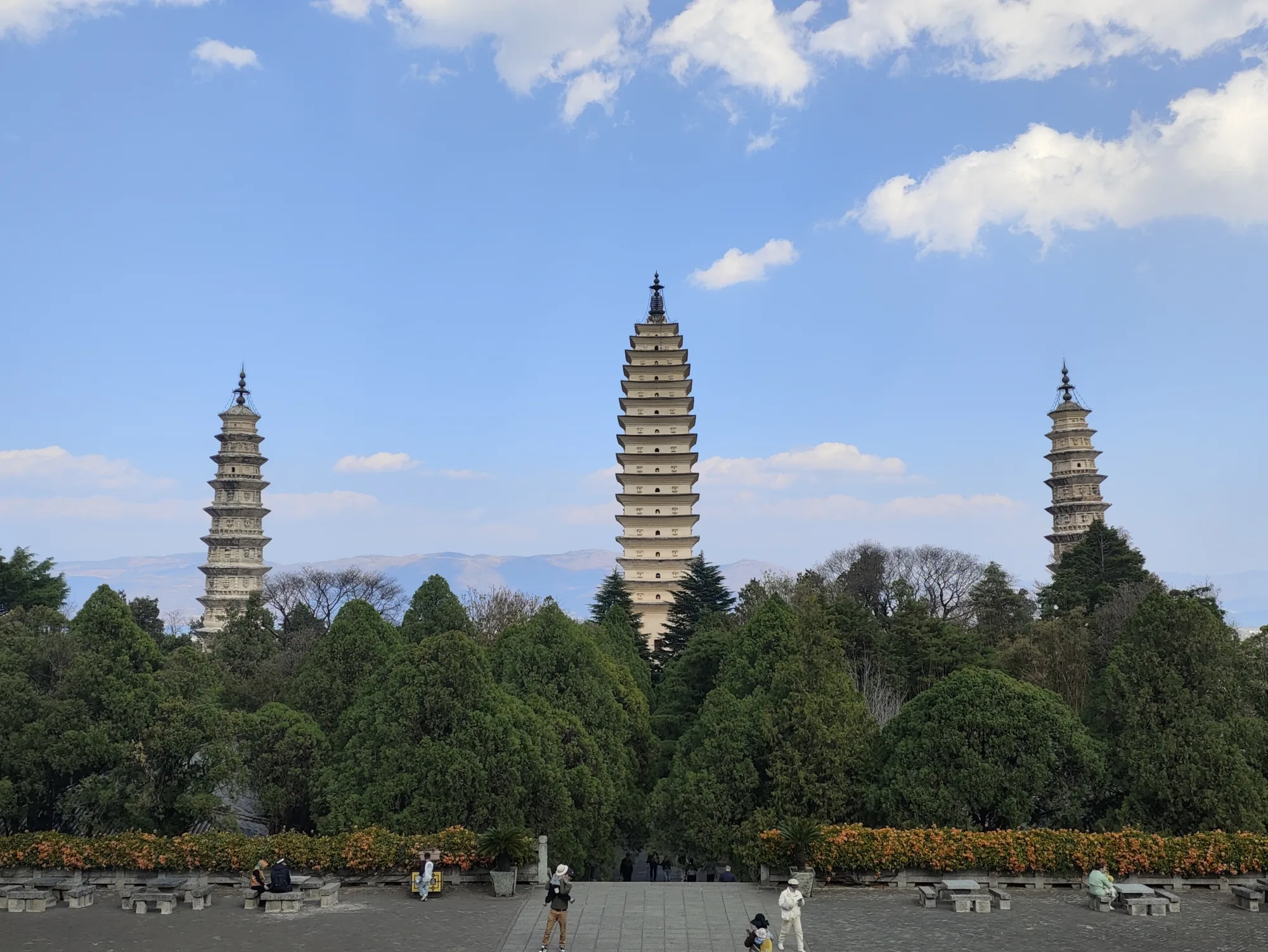
Dali: a lake, wind and white houses
Dali has a completely different mood. The city lies between Erhai Lake and the Cangshan mountains, and its historic part, surrounded by walls, is even streets, old gates and cafés. The main attraction is the Three Pagodas of Chongsheng Temple: three brick towers that have stood here for about a thousand years, the tallest of which rises almost seventy meters. Against the background of mountains and clouds they are especially photogenic. But Dali is valued not only for the pagodas. The main pleasure is a bicycle ride along Erhai Lake: paths run along the shore, and on the way there are fishing villages, rice fields and cafés with a view of the water. It is better to rent an electric bicycle or an ordinary bicycle for a few hours and ride at least part of the route.
The old village of Xizhou. A village of the Bai people, known for white houses with painting and inner courtyards. Here you can try local snacks, look into workshops and watch life. Xizhou is one of the most authentic and beautiful corners of Yunnan.
Shaxi. An ancient village on the “Tea Horse Road”, the trade route that linked Yunnan with Tibet. It is quiet here, and a market takes place on the square. It is more convenient to get there by car or an excursion bus.
The Cangshan mountains. Cable cars and paths from which there is a view of the lake and the city.
What to try: Yunnan cuisine
Yunnan is a gastronomic region. Be sure to try “guoqiao mi xian” — “across-the-bridge rice noodles”: hot broth is served separately, and you dip the raw ingredients into it yourself. Try mushrooms: in season they are served in soups, grilled and fried. In Dali and Lijiang popular are the fried goat-milk cheese “rubing”, “ersi” flatbreads, fish from Erhai Lake and the dishes of the Naxi people. Tea is a separate story: the homeland of pu-erh is nearby. If you are a vegetarian, say so in advance: local dishes often include meat broths. Street food is tasty and inexpensive, but choose places with high turnover and hot food.
How to get there and how to get around
Yunnan’s main gateway is Kunming, the provincial capital, where most international and domestic flights arrive. From Kunming to Dali you can get by high-speed train in about two to three hours, and from Dali to Lijiang about an hour by train. There are also airports in Lijiang and Dali. Between the station and the old town it is convenient to travel by taxi or via apps. In old Lijiang and Dali the main way of getting around is on foot. For trips to the surroundings take a car with a driver or join small groups: public transport to the villages runs rarely.
The Naxi and the Bai: two peoples, two cultures
So that Yunnan does not turn into a set of beautiful scenery, it is worth learning a little about the people who live here. The Naxi are a people long connected with trade routes and with the culture of Tibet and China: their traditional houses with inner courtyards, carved wooden shutters and canals became a model for the whole town. In the old days Naxi women took on most of the household affairs, and ethnographers still note this feature. The Bai are the people of Erhai Lake: they wear white and blue clothes, build white houses with paintings on the walls and celebrate festivals with songs, dances and spring fairs. If you are lucky enough to attend a local festival, treat it with respect: observe, ask permission for photos and don’t disturb the participants.
One day in Lijiang by the hour
So as not to get lost in the labyrinth of streets, divide the day into stages. Early in the morning, around six or seven, leave the hotel and walk the empty streets: the shops are closed, the canals reflect the sky and the light is soft. Have breakfast in a small café and head to Black Dragon Pool before the groups arrive. By day, in the heat and the crowd, go to Shuhe or Baisha, have lunch in a quiet village and rest. Toward evening return to the old town, climb the hill above the city and look at the roofs in the rays of the sunset. In the evening stroll among the lights, try local snacks and don’t forget to return to the hotel before tiredness takes its toll.
One day in Dali by the hour
In Dali it is best to begin with the Three Pagodas: in the morning there are fewer people, and the light falls beautifully on the brick. Then rent a bicycle and head to Erhai Lake: the paths laid along the shore let you ride fifteen to twenty kilometers, stopping at cafés and villages. Have lunch in Xizhou, walk the streets and look into the workshops. Return to the city by evening, rest and have dinner in a café inside the old walls. Such a day gives a good mix of history, nature and local life.
For photographers: angles and light
Lijiang and Dali are rewarding places to shoot. In Lijiang catch reflections of lights in the canals after sunset, and in the morning empty streets and mist over the roofs. The peak of Jade Dragon is better seen early in the morning, when the sky is clearer. In Dali shoot the Three Pagodas against mountains and clouds, and on Erhai the sunrise and sunset over the water. For portraits of locals always ask permission and don’t insist if the person refuses. Check that your phone and camera are charged, and at altitude protect your equipment from the cold: batteries drain faster.
When to go
The best seasons are spring (March–May) and autumn (September–November): warm by day, cool in the evening, a clear sky and good visibility of the mountains. Summer, from June to August, is the rainy season and high demand: green, but often overcast and crowded. In winter nights are cold, by day it can be sunny and warm, and there are fewer crowds; snow lies on Jade Dragon. The busiest week is the holiday week in early October: millions of Chinese come to Lijiang and Dali, accommodation prices rise and the streets are overflowing. About the calendar of events read the review China’s events in 2027, and about the main festival the piece Chinese New Year 2027.
Altitude and health
Lijiang is at an altitude of about two and a half thousand meters, and the surrounding mountains are much higher. Most people adapt without problems, but in the first days headache, shortness of breath and weakness are possible. Don’t hurry, drink more water, eat light food and don’t overdo alcohol. If you plan to climb Jade Dragon, give your body a day or two to adapt. With chronic heart and lung diseases consult a doctor before the trip. The sun at altitude is very intense: bring sunscreen, a hat and glasses.
What to bring
Clothes in layers: a warm jacket for the evening and morning, light things for the day, a raincoat. Shoes — comfortable, with a good sole: the old towns are paved with stone, and in the mountains trekking shoes will come in handy. A power bank for the phone, a translator and offline maps. A small first-aid kit, including altitude sickness remedies on your doctor’s advice. Sun protection. Cash for small purchases and in case of a failure of the payment apps.
Three ready routes
“Classic” — 6–7 days. Kunming, then Dali (two days: the pagodas, Erhai, Xizhou), then Lijiang (two days: the old town, Black Dragon Pool, Shuhe and Baisha).
“With mountains” — 8–10 days. Add Jade Dragon and Tiger Leaping Gorge, and an overnight stay in a village on the way.
“Yunnan unhurried” — 10–14 days. Kunming, Dali, Shaxi, Lijiang, Shangri-La and a return to Kunming; for those who like long trips and aren’t afraid of altitude.
Hotels in Lijiang and Dali
In Yunnan it is good to stay in small guesthouses in old quarters and in country hotels with a mountain view. Below is a selection from our database: look at the reviews and the “Hotel Health”, check the distance to the old town and the availability of a transfer. In holiday weeks it is better to book accommodation in advance.
FAQ
How many days are needed for Lijiang and Dali? Optimally five to seven days: two to three for Dali and two to three for Lijiang plus the road.
When is it better to go? In spring and autumn; in the holiday week in early October it is very crowded.
Is there altitude sickness? Mild is possible; in the first days don’t hurry and drink water.
How do I get from Dali to Lijiang? By high-speed train in about an hour.
Which is better — Lijiang or Dali? Lijiang is for the old town and mountains, Dali is for the lake, bicycles and calm; it’s best to see both.
Do I need Chinese? Not required, but a translator and offline maps help a lot.
Entry rules, prices and transport schedules may change — check the current information with your hotel and the carrier.