China 2027: the main events of the year — Spring Festival on February 6 (Year of the Goat), Chunyun, the Lantern Festival on February 20, the Formula 1 Grand Prix in Shanghai, dragon boats, Qixi, the Mid-Autumn Festival and Golden Week. Dates, customs and tips.
Every winter the largest movement of people on the planet takes place in China. In forty days the country makes almost ten billion trips: students, workers, engineers and salespeople return to their home villages, stations hum like a hive, and on trains people stand in the aisles and fall asleep on their bags. In 2026, by official estimates, there were 9.41 billion trips in forty days — an average of 235 million a day. All for the sake of one evening — the New Year dinner with the family. In 2027 that evening falls on February 5, and New Year itself — the Spring Festival — on February 6: the Year of the Goat begins, and for a few days China turns into a country of red lanterns, dumplings, firecrackers and open temple fairs. But China’s calendar in 2027 is much broader than a single holiday: there is icy Harbin, lanterns at Yuyuan, Formula 1 racing in Shanghai, dragon boats, the Chinese Valentine’s Day and the autumn Golden Week. We go through it all in order.
- Late December 2026 — late February 2027 — the Harbin Ice and Snow Festival (the opening ceremony is expected on January 5).
- January 22 — March 2 — “Chunyun”, the New Year migration peak.
- February 6 — Spring Festival, the Year of the Goat (provisional days off — February 4–12).
- February 20 — the Lantern Festival.
- April 5 — Qingming, the day of remembering ancestors.
- April 16–18 — the Formula 1 Chinese Grand Prix in Shanghai.
- June 9 — the Dragon Boat Festival.
- August 8 — Qixi, the Chinese Valentine’s Day.
- September 15 — the Mid-Autumn Festival.
- From October 1 — National Day Golden Week (about seven days; the schedule will be approved by the State Council at the end of 2026).
How Chinese holidays affect a trip
China in 2027 has seven official public holidays: New Year (January 1), the Spring Festival (February 6), Qingming (April 5), Labor Day (May 1), the Dragon Boat Festival (June 9), the Mid-Autumn Festival (September 15) and National Day (October 1). Many of them are stretched into “golden weeks”: the authorities shift days off, and the country rests five to nine days in a row. The final schedule with the transfers of working days is published by the State Council usually in November–December of the previous year, so the days off for 2027 are still provisional. For a traveler this means two things. First: on the days of such holidays all the famous places are overcrowded, and train tickets and accommodation get more expensive and run out; second — during the rest of the year you have a lot of quiet windows when the same places empty out. So the main rule is: either come specially for the holiday and prepare in advance, or avoid the golden weeks altogether.
December — February: Harbin and the world of ice
Winter in China begins in Harbin. In the 2026–2027 season the main site, Ice and Snow World, is expected to open around December 20–24, and the festival’s opening ceremony will take place on January 5, 2027; the park works until the end of February, until the sculptures begin to melt. The dates are not yet confirmed — they are usually announced a month or two ahead — so follow the official announcements. At night in frost down to minus thirty the city of ice glows from within, and a detailed guide to tickets, clothing and venues is in our article on the Harbin Ice and Snow Festival.
January — March: Chunyun and the Spring Festival
Chunyun is forty days around New Year, from January 22 to March 2, 2027: fifteen days before the holiday and twenty-five after. It is in these weeks that the country makes that very giant movement, and traveling around it on an ordinary schedule is impossible. Useful tips. If your route allows, arrive before the main peak — for example in Beijing a week before the holiday, when the city is still full of life and there are noticeably fewer tourists. Use planes and high-speed trains: on Chunyun days standing-room tickets are sold on ordinary trains, and the cars become almost impassable, while high-speed ones fill up less. Get to the station at least an hour and a half before departure: queues for screening and in waiting halls stretch out. Train tickets in China are usually sold fifteen days before departure, so set a reminder.
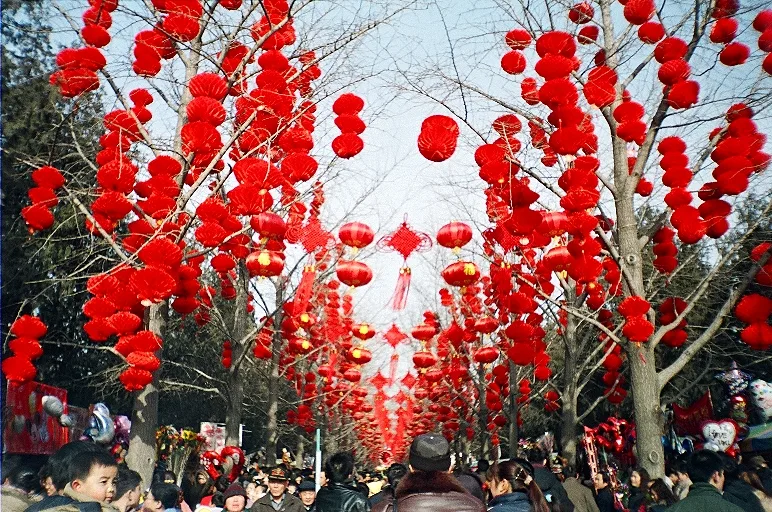
The holiday itself — February 6 — is a family evening: a reunion over the New Year dinner (in the north with dumplings), red envelopes with money for children, dragon and lion dances, fireworks and huge temple fairs. In 2027 a goat will appear in the decor: sculptures and drawings of goats with flowers or musical instruments decorate parades and fairs. Some establishments are closed on these days, especially in the first three or four days, but there are plenty of open places too: in large cities shopping malls, cafés, parks and, of course, temple fairs are open.
Beijing. The main thing here is the miao-hui temple fairs. The best known takes place in Ditan Park (the Temple of Earth) in the northeast of the center: it began to be held in 1985, and every year about a million people come to it. Sugar figurines, glazed hawthorn berries, pea-puree pastries, braised pork and treats of old Beijing are sold there, and on the stage there are lion dances, performances and contests. Another place is the fair on Liulichang Street. Come at opening to avoid the queues. Our guide to the underground city of Beijing is the ideal supplement for a day when it is cold outside.
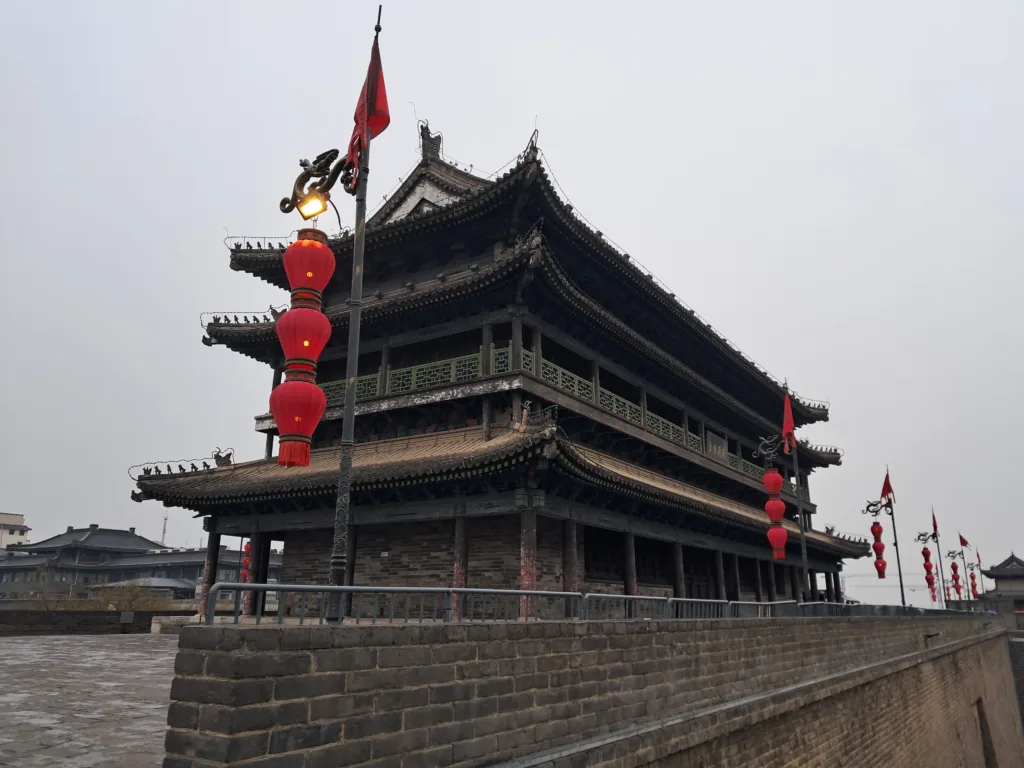
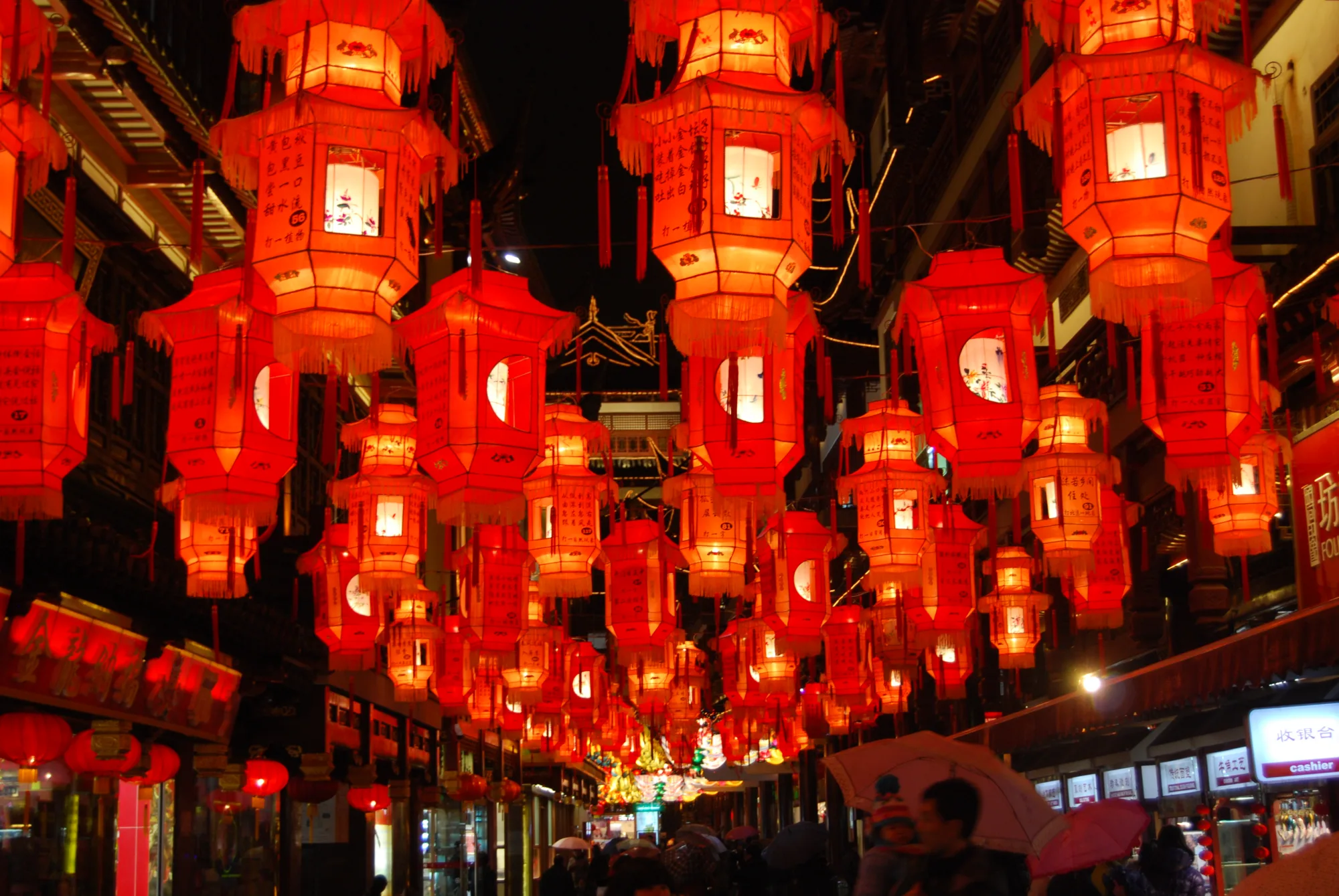
Shanghai. The Lantern Festival in Yuyuan Garden lasts about five weeks around New Year: it opens three weeks before the holiday and closes at the Lantern Festival. The garden turns into a sea of light: garlands, arches, figures of the zodiac animal. It is worth buying evening tickets in advance. Around it, in the old quarter, are stalls with local sweets and snacks. In Xi’an on these days the city wall and the Tang Paradise park are beautifully lit, and in Nanjing the famous lantern fair on the Qinhuai River takes place.
February 20: the Lantern Festival
The fifteenth day of the first lunar month — Yuanxiao, the Lantern Festival — ends the New Year celebrations. The sky and the city streets are lit by thousands of lanterns: for children in the shape of animals and cartoon characters, for adults complex structures many meters high, and in the streets people solve riddles written on the lanterns and eat tangyuan — sticky rice balls with a filling of sesame, nuts or red beans. The most large-scale fairs take place in Nanjing and Shanghai: there in one evening you can see and walk several kilometers of light. A practical tip: that evening the celebrations end late, so dress warmly and think through your return in advance.
April: Qingming and Formula 1 in Shanghai
April 5 in China is Qingming, a day of remembrance when families go to cemeteries, tidy the graves, bring flowers and food. The holiday is quiet and personal, with no tourist “show”, but it gives a rare opportunity to see how the Chinese honor the memory of their ancestors. Practically it is also a short holiday break, because of which popular places can be crowded. A completely different pace in the middle of the month: on April 16–18, 2027 the Formula 1 Chinese Grand Prix will take place at the Shanghai International Circuit in Jiading district. For motorsport fans it is a chance to combine the race with a trip to Shanghai; book tickets and hotels in advance, and prepare the city — with the Bund, Xintiandi and the bars — using our guide to nightlife in China.
June: dragon boats and rice in leaves
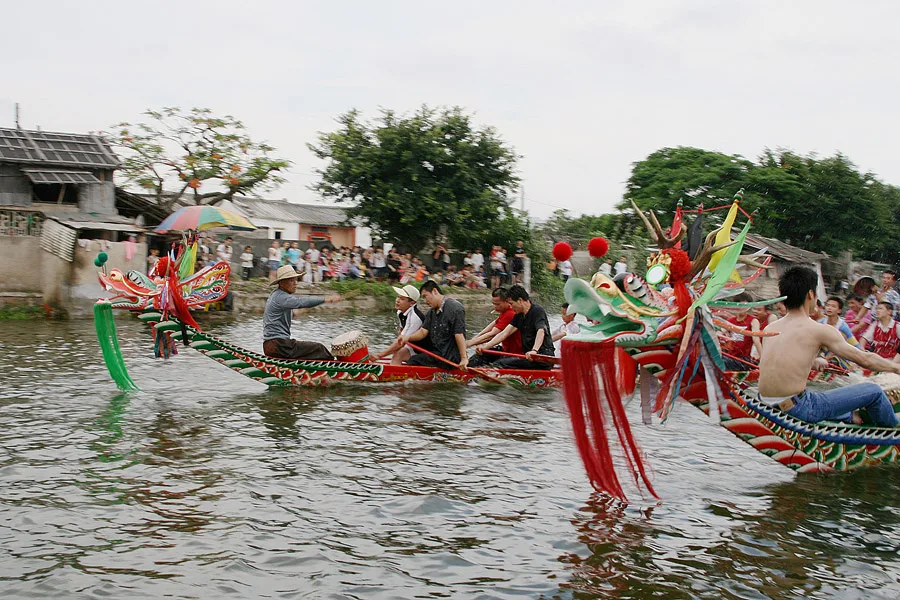
June 9 is the Dragon Boat Festival, Duanwu, falling on the fifth day of the fifth lunar month. The main event is dragon boat races, a tradition that in southern China is more than two thousand years old. Long painted boats with a drummer in the bow and dozens of rowers race across rivers and lakes, while spectators on the banks shout and clap. On this day people eat zongzi — pyramids of sticky rice with filling wrapped in bamboo or reed leaves — and drink rice wine with realgar, a custom supposed to ward off evil. The best place to watch is the south of the country: Guangdong, Guangxi, Yunnan, as well as the coast. Plan with a margin: June in the south is the rainy season, hot and humid.
August and September: Qixi and the Mid-Autumn Festival
August 8, 2027 is Qixi, the “seventh night of the seventh month”, the Chinese Valentine’s Day. At its base is the legend of the Weaver Girl and the Cowherd, whom the Milky Way river separated and who are allowed to meet only once a year. Today on this day couples exchange gifts and go to romantic dinners, and in large cities light shows are held. September 15 is the Mid-Autumn Festival, second in importance after New Year. Families gather, admire the full moon, eat mooncakes (yuebing), carry lanterns and exchange gifts. The holiday is felt well even in tourist cities: shop windows are packed with boxes of mooncakes, and in parks lanterns are lit in the evenings. The best place is the embankments and parks by the water: in Hangzhou by West Lake, in Guilin on the Li River (guide to Guilin and Yangshuo) and in Shanghai on the Bund.
From October 1: Golden Week — a time for caution
National Day on October 1 launches China’s best-known “golden week”: about seven days, in 2027 provisionally October 1 to 7, with the exact schedule and transfers of working days to be announced at the end of 2026. This is the peak of travel: millions of Chinese head to the country’s most famous places, tourist zones are overcrowded, train tickets and accommodation vanish and prices rise. My honest advice is either to come to China outside these days or to choose places that families do not rush to. It is better to avoid Huangshan (guide to Huangshan), Zhangye Danxia (Zhangye Danxia) and Dunhuang (Dunhuang) precisely on these days: the Mogao caves sell out weeks ahead, and at Huangshan’s viewpoints you have to stand in a queue. But in October, after Golden Week, these places become accessible again, and the weather is ideal.
What to try: the taste of Chinese holidays
Every Chinese holiday has its own food, and you can travel by the calendar as if by a menu. For New Year in the north they make jiaozi — dumplings in the shape of ancient ingots, which symbolize wealth; the south prefers nian gao, a sticky rice cake whose name sounds like “higher year after year”. At the Lantern Festival people eat tangyuan — round rice balls, a symbol of family unity. At the Dragon Boat Festival the table has zongzi, at the Mid-Autumn Festival — yuebing mooncakes with lotus, red bean, nut or salted egg yolk filling. If you find yourself in Chengdu during the holiday days, don’t miss an evening performance of Sichuan opera with the magical mask change — bianlian — at this time the theaters are usually especially crowded and the program is festive. Try things at markets and small cafés, not only in tourist restaurants: that is where the food is tastiest and most authentic.
And one more tip for gourmets: on holiday days many restaurants work with a special menu or are closed for the first days of the New Year, so book a table in advance or keep a reserve of options. Fresh dumplings and mooncakes can be taken in shops and supermarkets too — it is the best way to taste the holiday even if you couldn’t get into a restaurant.
Practical tips for a trip during holidays
Payments. Almost everywhere in China Alipay and WeChat Pay are accepted; foreigners can link foreign cards to them, and cash is best kept as a backup. Transport. Book train tickets and accommodation in advance, and on peak-flow days prefer high-speed trains and planes. Apps. Maps, a translator and a ticket booking service will be useful; access to some foreign services is restricted in China, so think through connectivity in advance and download the offline maps you need. Culture. Don’t come to visit empty-handed: fruit, sweets and red envelopes are the standard gift, and at New Year the greeting “Xinnian kuaile” brings smiles. And leave a time reserve in your route: Chinese holidays like to drag on, and a queue at the station is not a reason to panic but a way to get to know the country.
Three routes for the 2027 holidays
“New Year with lanterns” (8–10 days). Beijing a week before the holiday (temple fairs, the underground city), then Shanghai for Yuyuan and the Lantern Festival on February 20. Take warm clothing and buy tickets between cities in advance.
“Spring: races and a river” (7–9 days). Shanghai for the Grand Prix on April 16–18, then a trip to Guilin and Yangshuo on a raft along the Li River: April is an excellent time for the river.
“Autumn outside Golden Week” (8–10 days). From mid-October: Huangshan, Zhangye Danxia and Dunhuang, when the crowds subside and the weather is ideal.
FAQ
When is Chinese New Year in 2027? February 6, the Year of the Goat begins; provisional days off are February 4–12.
When is the Lantern Festival in 2027? February 20 — the fifteenth day of the first lunar month.
When is the best time to go to China to avoid the crowds? Outside the Spring Festival and October’s Golden Week: the rest of the time popular places are much more accessible.
What is Chunyun? A forty-day migration peak around New Year — in 2027 from January 22 to March 2.
When is the Formula 1 Chinese Grand Prix in 2027? April 16 to 18 at the Shanghai International Circuit.
When is the Mid-Autumn Festival in 2027? September 15: a full moon, mooncakes and lanterns.
The dates and schedules of many holidays are tied to the lunar calendar, and the official days off are approved by the State Council — check official sources closer to the trip.