How the Chinese save: Alipay and WeChat Pay, life hacks on food, transport, shopping, housing and connectivity in China — practical tips without which a foreigner overpays for everything.
In China saving starts not with haggling but with the phone: without Alipay or WeChat Pay a foreigner pays more than a local for a taxi, the metro and even entry to a park, simply because they have to use intermediaries — a hotel concierge, cash at an unfavourable exchange rate, tourist services with a markup. The Chinese have long lived in an almost cashless economy, where discounts, coupons and dynamic pricing work through apps rather than through verbal haggling, as in Southeast Asia. This article offers specific life hacks used by the Chinese themselves: how to save on food, transport, housing, shopping and connectivity in a country where the rules of the game differ greatly from its neighbours in the region.
- The main thing: without Alipay or WeChat Pay you pay more for everything and with more difficulty — set them up before the trip.
- Food: a portion in a local canteen is 15–25 yuan versus 60–100 in a restaurant for foreigners.
- Transport: the metro costs 2–8 yuan a ride; a high-speed train in second class is hardly slower than first.
- Connectivity: a local SIM or eSIM from an operator is better value than tourist roaming packages.
- Shopping: coupons in apps give a 20–50% discount that is not available with ordinary payment.
- The main principle: in China people save through apps and coupons, not through haggling on the street.
Why without mobile payments in China you lose money
Over the last decade China has moved to mobile payments so completely that many sellers physically don’t keep a cash till and have no terminal for foreign cards. A tourist without Alipay or WeChat Pay has to use taxis for foreigners at an inflated fare, pay cash where that is possible at all, or overpay intermediaries who accept a card for a commission. The Chinese set up these apps from birth and get access to all the internal discounts, coupons and dynamic prices that a person paying cash or with a foreign card directly does not see. The most important life hack for a trip to China is to link a foreign card to Alipay before departure: it opens access to the same price list as locals have. Detailed instructions are in our articles on payments in China and topping up Alipay.
Food: a canteen for locals versus a restaurant for foreigners
A portion of noodles, rice with meat or dumplings in an ordinary Chinese canteen costs 15–25 yuan (2–3.5 dollars), while in a restaurant with an English menu and photos of dishes near tourist attractions a similar dish costs 60–100 yuan. The difference is explained by rent in a tourist area and service in English, not by the quality of the food. The best guide is a queue of local people and a menu only in Chinese: photograph the characters and translate through an app if you can’t read them. Fast-food chains like Mixue (ice cream and drinks) and Luckin Coffee (coffee) cost several times less than international analogues and are actively used by local young people, not only by visitors.
Transport: the metro, high-speed trains and taxis via an app
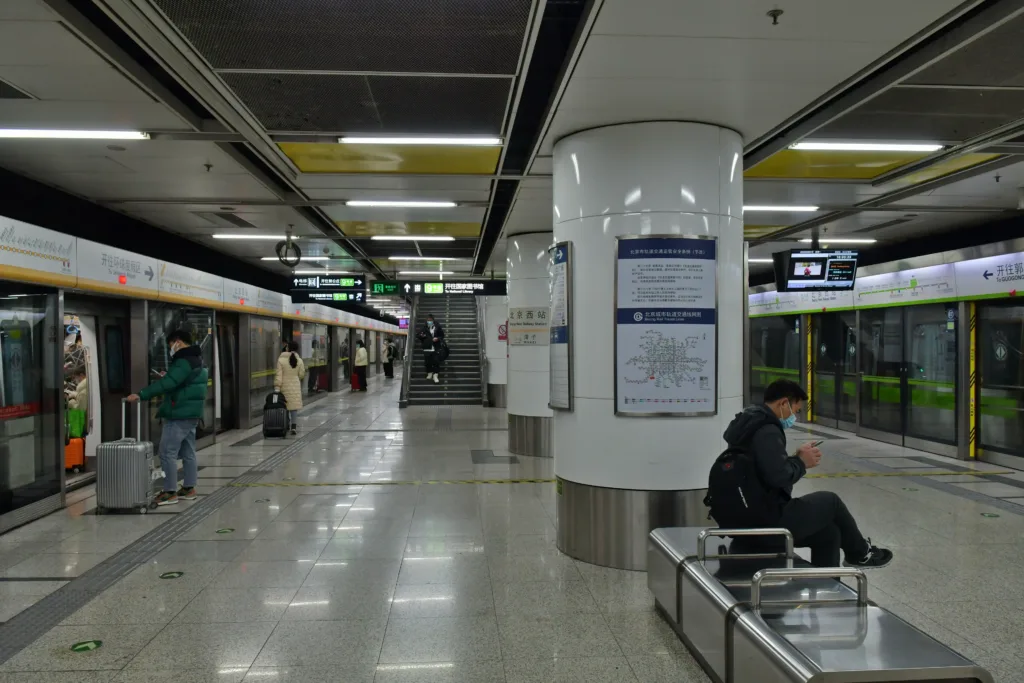
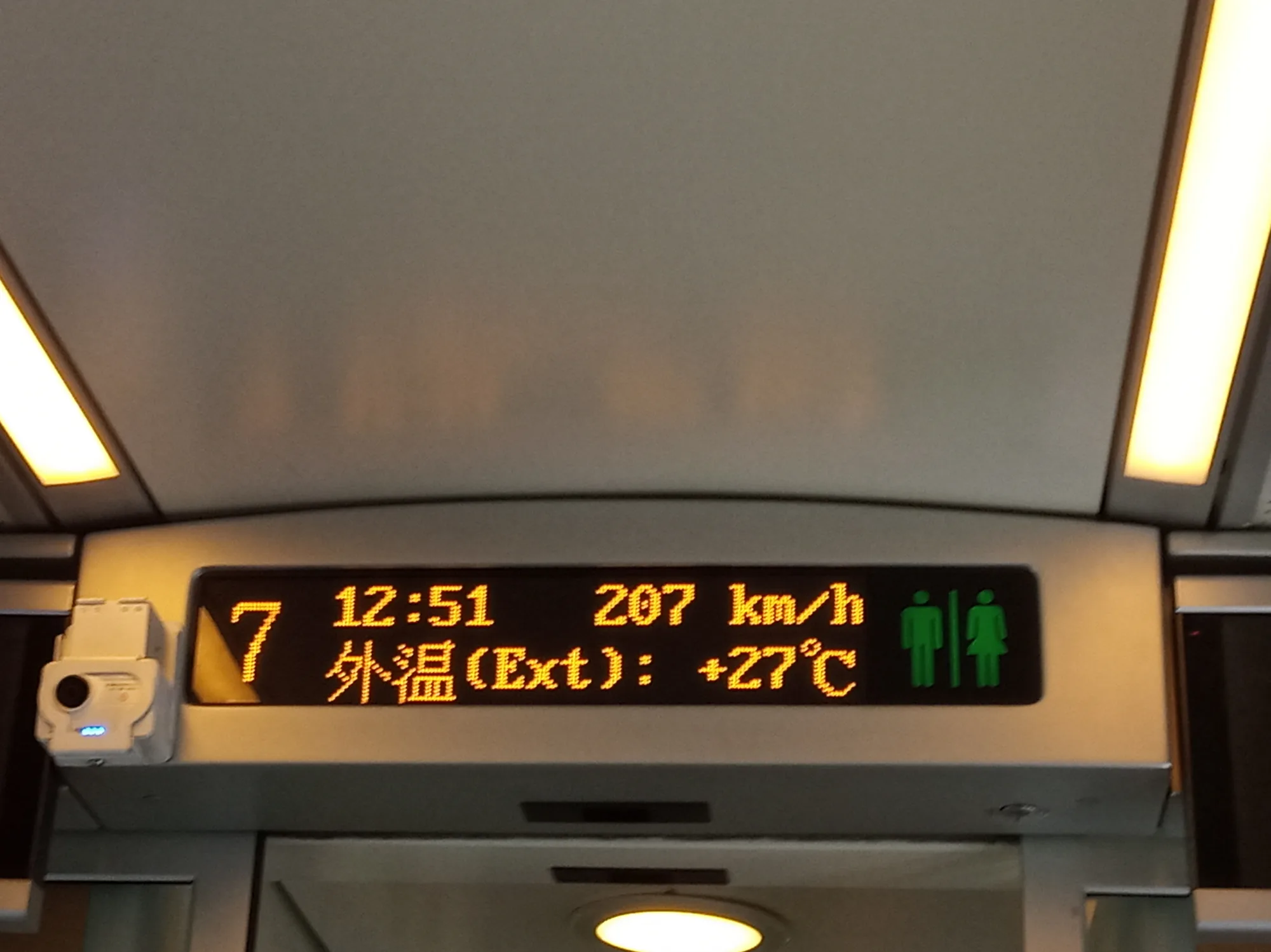
The metro in Chinese megacities is one of the cheapest and most efficient in the world: a ride costs 2–8 yuan depending on distance, and almost all locals use it instead of taxis at rush hour. For trips between cities high-speed trains in second class give almost the same speed as first class at a noticeably lower price — the overpayment for first class is justified only on the longest routes, where extra comfort matters. It is better to order a taxi via the Didi app (the Chinese analogue of Uber) — the price is fixed in advance and is usually lower than with a driver who picks up a passenger right off the street and does not always switch on the meter for a foreigner. For tickets and routes see the article on China’s high-speed trains.
Housing: how to search for cheaper than the standard booking
International booking sites do not show the whole market in China: local platforms such as Ctrip (the same as Trip.com in its international version) often give lower prices for the same hotels specifically for the domestic market, and sometimes include promotions unavailable when booking through foreign sites. Hostels in big cities aimed at local youth and students cost noticeably less than hotels for foreigners at comparable quality — it is easier to look for them through Chinese apps than through the usual international aggregators. When booking for a long period in a serviced apartment, a monthly discount is almost always available on request directly from the management company rather than through the standard rate on the site.
Shopping: coupons in apps instead of haggling on the street
Unlike Southeast Asia, haggling on the street is almost not practised in China even at markets — instead the economy of discounts works through apps. In supermarkets and on marketplaces such as Taobao and Pinduoduo, coupons and group discounts of up to 20–50% off the usual price regularly appear, which a person paying cash at the till without an app will not see. Markets such as the Silk Market in Beijing or the Yiwu market are an exception where haggling is still appropriate, especially for goods without price tags and for large wholesale batches. For everyday purchases look for local chains such as Miniso (inexpensive household goods) instead of tourist souvenir shops with a multiple markup.
Connectivity: eSIM, roaming and VPN
Tourist roaming from your home operator is almost always the most expensive way of staying connected in China. It is cheaper to get an eSIM from a local or international provider before departure or to buy a physical SIM card from a Chinese operator at the airport or in an official telecom shop — the price of a data package for two or three weeks is usually lower than an equivalent roaming package by volume. A special feature of China is the blocking of many foreign services and social networks: if you need access to familiar apps, a VPN is worth setting up in advance, before entering the country, because downloading and setting it up on the spot is much harder.
Five rules the Chinese themselves use
Set up Alipay or WeChat Pay before the trip. It opens access to domestic prices and coupons unavailable when paying cash or with a foreign card directly.
Eat where the menu is only in Chinese. It is the most reliable indicator of the price for locals rather than tourists.
Use the metro instead of a taxi at rush hour. The difference in price and in time spent in traffic can be manifold.
Look for coupons in apps before buying. A 20–50% discount is almost always available if you know where to look.
Book accommodation through local platforms. The price for the domestic market is often lower than on international sites.
Night markets and street food: where it is really cheap
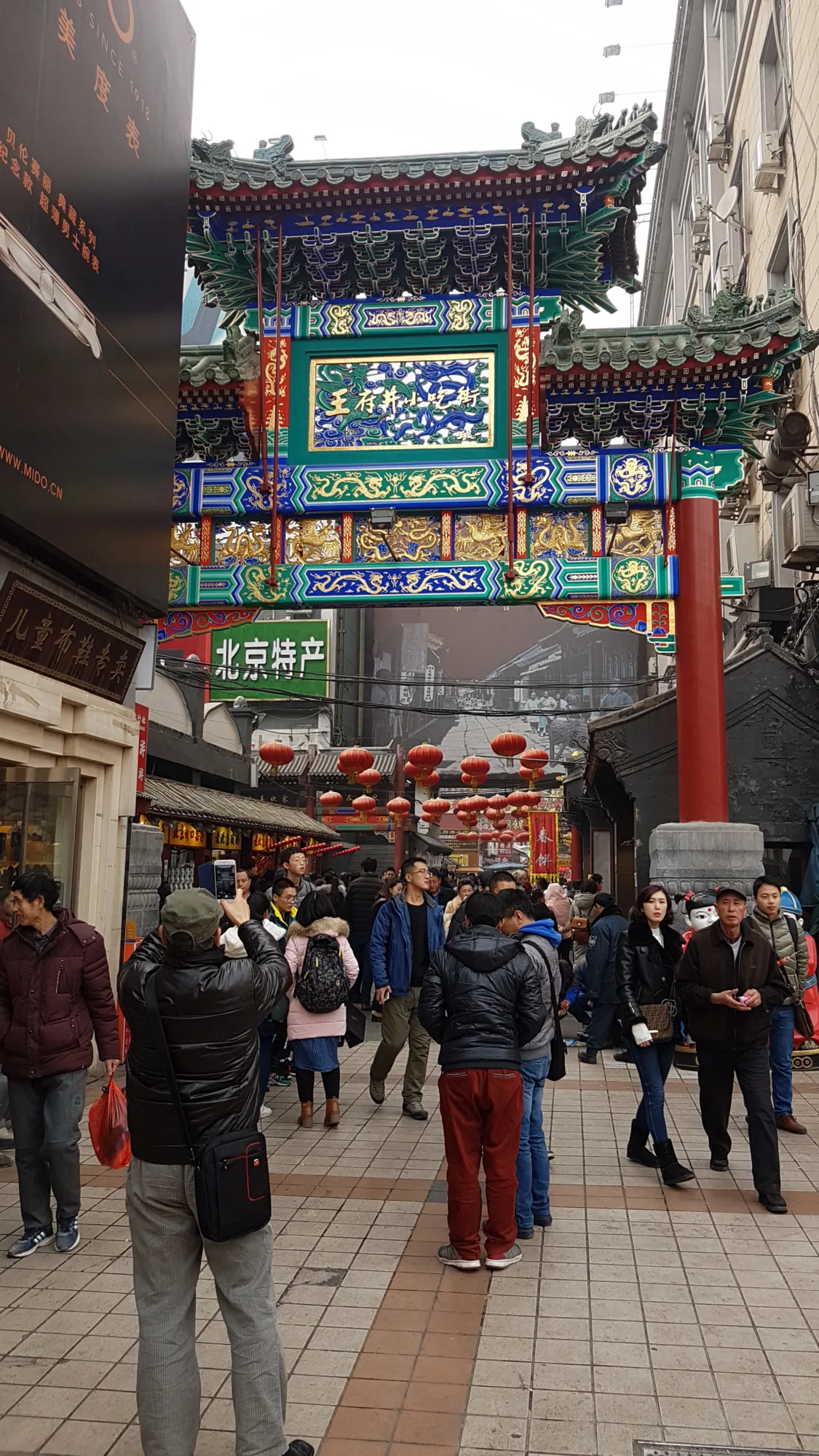
The famous Wangfujing snack street in Beijing is beautiful and atmospheric, but prices there have long been tourist-oriented: exotic skewers and seafood on a stick cost several times more than similar street food in residential neighbourhoods. Locals go to less hyped night markets near their own districts, where the range is simpler but the price honest. A good guide is the evening rows by metro stations in residential areas: they sell the same things as on tourist streets, but at prices for locals. Ask colleagues or Chinese acquaintances, if you have any, where they themselves go for an evening snack — this is almost always a better source of information than any rating on the internet.
Tickets to sights: booking in advance through apps
Many popular sights in China, including sections of the Great Wall and big museums, require tickets to be booked in advance through apps rather than sold at the ticket office on the spot — a feature that often surprises foreign tourists. Booking in advance through official channels not only spares you the queue but is often cheaper than buying through a tourist intermediary or a guided tour, where the price already includes a markup for organisation. Install a translator with text recognition on your phone in advance: many sight-booking sites work only in Chinese.
Massage, hairdressers and services for locals
As in other countries of the region, services in China’s tourist areas cost noticeably more than similar services in residential neighbourhoods. A foot or back massage in a small salon for locals costs several times less than at a hotel spa for foreigners, and the quality is often just as good. Hairdressers and barbershops in residential areas are also considerably cheaper than salons in the centre and tourist zones. The difference in price here is again explained by the rent of the premises and the clientele’s expectations, not by the masters’ qualifications.
What even experienced travellers often forget
A visa for China requires advance arrangement for most nationalities, although in recent years visa-free transit programmes have appeared — the rules change quite often, so check the current conditions for your citizenship before buying tickets rather than relying on year-old information. Details are in the article on visa-free transit in China. Insurance rarely makes it into the daily budget, but when you go to a private clinic for foreigners without insurance the bills can be significant. And finally, cash is still needed on a trip: not all places accept exclusively mobile payments, and ATMs for foreign cards are not in every city — carry a small reserve of yuan in case of technical failures.
Hotels and chains for the domestic market
Alongside international chains, China has large local hotel chains such as Atour, Jinjiang and Huazhu — they are oriented first of all to domestic business travellers and tourists rather than foreigners, so the price for a room of comparable quality is usually lower than in a hotel of a well-known international brand in the same area. It is more convenient to book such hotels through Chinese apps, where promotions for loyalty-programme members also appear more often. If you don’t speak Chinese, the staff of big-city hotels of these chains can usually still manage basic English, and check-in through an app with an electronic key is becoming more and more common even in the budget segment.
Long-term stay and apps for living
If you plan to stay in China for a month or longer, master a few everyday apps that locals use: Meituan for food delivery and booking services with constant discounts, supermarket apps such as Freshippo for same-day grocery delivery, and loyalty programmes of chains such as Haidilao, which give noticeable discounts to regular customers. For everyday life and purchases see our articles on supermarkets and Freshippo, Mixue, Miniso and Luckin Coffee. For payments in general see the comparison of payment methods in China.
FAQ
Do I need Alipay for a trip to China? Highly desirable: without it you pay more and lose access to many discounts and coupons.
How much does food in a local canteen cost? 15–25 yuan versus 60–100 in a restaurant for foreigners for a similar dish.
Is first class on high-speed trains worth it? Usually not: second class is hardly slower and noticeably cheaper.
Where can I find discounts on purchases? In apps — Taobao, Pinduoduo and the apps of particular store chains.
Do I need a visa to enter China? It depends on citizenship and route; check the current rules and visa-free transit programmes before the trip.
What is most often forgotten in the budget? Insurance, a reserve of cash yuan and setting up a VPN before entering the country.
Prices and rules change depending on the season, currency exchange rates and visa policy — check current information on the spot.